Professional Photography for Content Creators in Johannesburg, Pretoria & South Africa
Chapter Three: Becoming Unmistakable
Why consistency has nothing to do with posting the same thing over and over again
I’ve always found it slightly amusing when somebody tells me they want something completely different. As a photographer, I understand the temptation. Different feels creative. Different feels brave. Occasionally, it even gives us a perfectly respectable excuse to buy something new and call it a business expense.
The problem begins when the determination to be different becomes so strong that nothing you create appears to belong to the same person. Content creators can be particularly good at this. One month the feed is dark and mysterious. The next it’s bright, playful and filled with pastel colours. A few weeks later they’ve apparently moved into a hotel room, discovered dramatic window light and developed a sudden passion for black and white photography.
Individually, the photographs may be excellent. Together, they can look like six different people sharing one password.
This is where consistency becomes interesting, because I think we’ve misunderstood what it means. It isn’t posting the same photograph repeatedly, wearing the same outfit or standing against the same wall. It certainly isn’t editing every image to precisely the same shade of beige and becoming terrified to move beyond it.
Consistency is more subtle. It is the invisible thread that allows people to recognise your work while still giving you the freedom to evolve.

The Difference Between Repetition and Recognition
In Chapter Two, we explored the invisible conversation taking place every time somebody encounters your work. While the creator examines tiny imperfections, the audience is making broader, more emotional decisions. Do I like this person? Do they interest me? Would I like to see them again?
When they return to your profile, another question begins to matter. Do I recognise them?
Creators are constantly encouraged to make something new. New ideas, trends, formats, sounds and locations. The internet has a remarkable appetite for novelty, and social media is very good at making yesterday feel as though it happened during the reign of Queen Victoria.
I’ve never been entirely convinced that new automatically means better.
Think about the musicians you love. You can often recognise them before the first verse has finished. A great writer can tell an entirely new story and still sound unmistakably like themselves. Walk into a restaurant you’ve visited for years and, even if the menu has changed, something in the atmosphere still feels familiar.
Photography works in much the same way. A creator can move from a studio to a hotel, from colour to black and white or from playful to sensual, and still retain a clear visual identity. The location, clothes and lighting may all change. What remains is the character of the work.
That is where recognition begins.
Your Audience Is Learning You
One of the things I find fascinating about personal branding is that audiences are constantly learning, even when nobody is deliberately teaching them. Every photograph adds another small piece of information. The way you dress, the colours you favour, the mood of your work and even the way you smile begin to form an impression.
One photograph rarely creates an identity, but a hundred can. Over time, your work may become warm, elegant, playful, intimate, mysterious or perhaps slightly dangerous. Your audience probably isn’t consciously analysing any of this, and I sincerely hope they have more exciting things to do on a Saturday evening, but the impression develops nonetheless.
Imagine meeting somebody several times and discovering a completely different personality on every occasion. The first time they’re warm and funny. The second they’re distant and mysterious. The third they’ve become a luxury lifestyle expert posing beside a rented sports car. By the fourth meeting, they’re standing on a mountain telling you to trust the process.
You might continue watching out of curiosity, but it becomes increasingly difficult to know who you’re watching.
Some of the strongest creators I’ve photographed have changed enormously over the years. Their work became more sophisticated, their ideas more ambitious and their understanding of their audience far sharper. They evolved, but the person at the centre remained recognisable.
Evolution builds on the same story. Constant reinvention starts a new book every few weeks.
The Problem With Borrowing Other People’s Success
Comparison creeps into almost every creative profession. Photographers look at somebody else’s lighting and wonder whether we should be using it. An editing style becomes popular and suddenly our own colours seem slightly wrong. Somebody buys a new lens and, within minutes, we’re online investigating whether our entire career has secretly been held back by a piece of glass we didn’t know existed yesterday.
Content creators face this on a much larger scale. Spend ten minutes on social media and you’ll see people succeeding in completely different ways. One builds an audience through humour. Another through mystery. Someone else has immaculate luxury imagery, while another appears to have built an entire business sitting in bed wearing very little and drinking coffee.
Spend enough time watching all of them and the temptation to borrow becomes almost irresistible. The danger is that, piece by piece, your own identity disappears beneath everybody else’s success.
Creators often arrive at Boudoir Fusion Photography with folders of reference images, and I encourage it. They help me understand what attracts somebody visually. Sometimes a clear character runs through the collection, even when the photographers, people and locations are completely different.
Other folders are glorious chaos. Dark and moody sits beside bright and commercial. Soft and romantic collides with highly provocative. Somewhere along the way, a bathtub and a motorcycle have joined the conversation.
The useful question isn’t simply whether you like an image. It is why you like it. Perhaps it’s the intimacy, the humour, the light or the sense of mystery. Once you understand that, you can take inspiration from an idea without borrowing somebody else’s identity.
That distinction matters far more than recreating the photograph.



A Content Library, Not Just Photographs
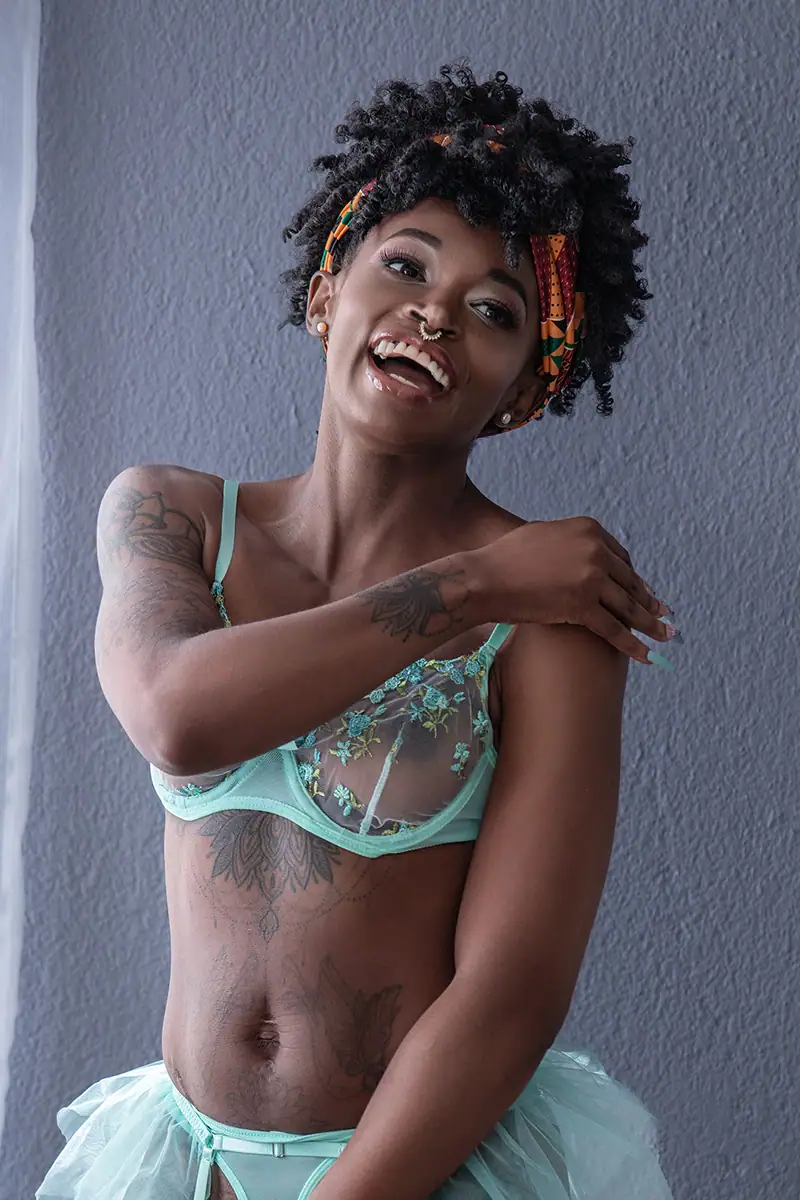
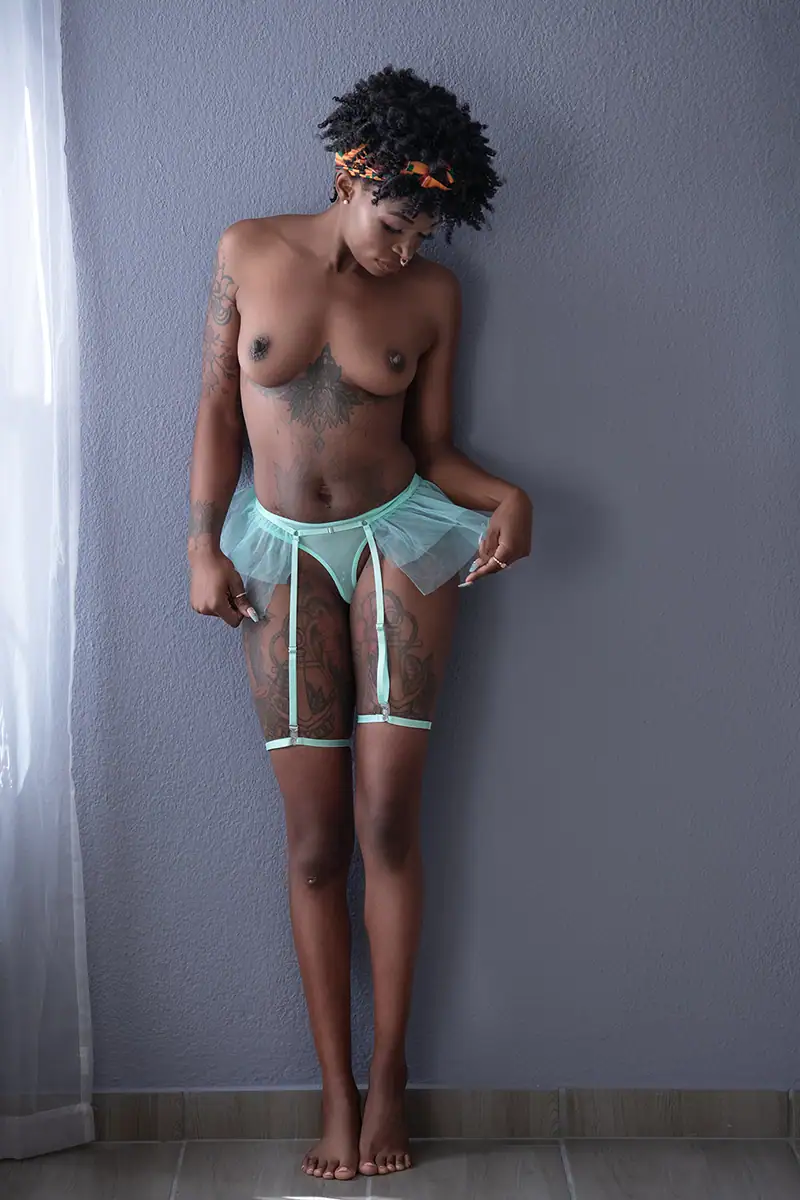
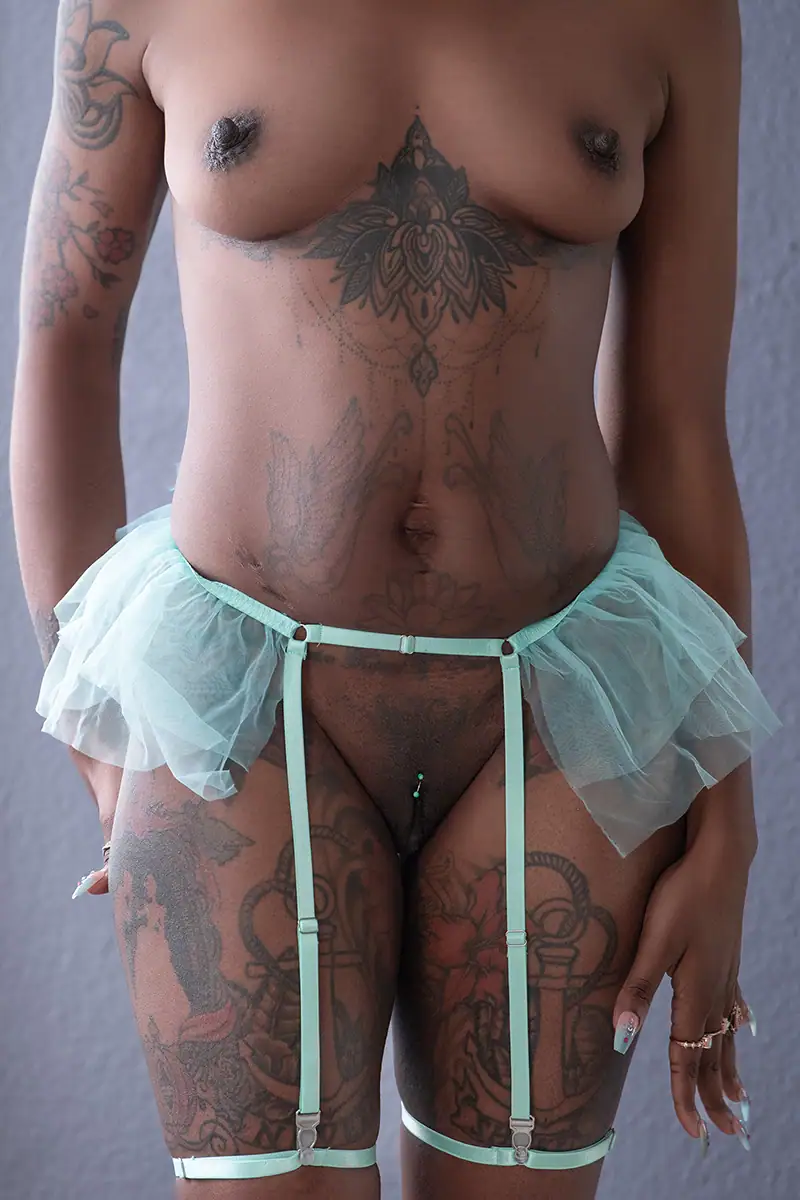
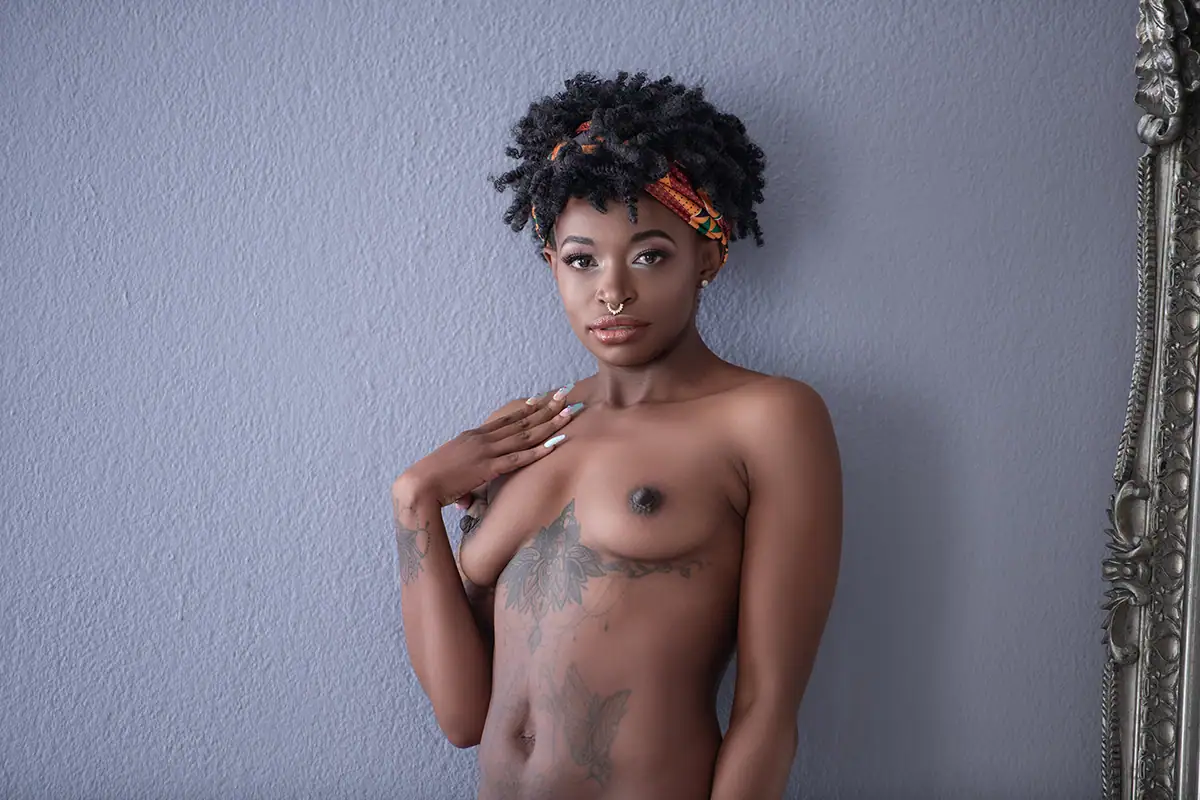
This has changed the way I approach professional photography for content creators. I no longer believe the goal of a photoshoot should simply be to produce forty beautiful images. A beautiful gallery is lovely, but if the photographs have no relationship with one another, their long term value is limited.
I would rather build a content library.
A content library is created with time in mind. We create variety without losing identity. Different outfits, sets and moods can coexist, but the photographs should still feel as though they belong to the same person and the same broader story.
I’ve worked with several content creators over many years, some returning to photograph with me regularly. Our challenge was always to keep the content fresh without losing the person their audience already recognised.
We changed sets, outfits, lighting and ideas. We experimented constantly and occasionally disappeared down creative rabbit holes that seemed considerably more sensible at the beginning than they did at the end. Over time, some of those creators accumulated extraordinary libraries of photographs, far more than they could realistically post once and forget.
That becomes particularly interesting on subscription platforms, where audiences naturally change. Some subscribers stay, others leave and new people arrive months or years later. The audience looking at your work today is not necessarily the audience that saw it two years ago.
A strong photograph doesn’t expire simply because you posted it once. If it still represents you and belongs within your brand, much of your current audience may never have seen it.
I’m not suggesting rotating the same twenty photographs until your longest serving subscriber suspects they’re trapped in a photographic version of Groundhog Day. There is, however, an enormous difference between repeating yourself and allowing strong work to have a longer life.
Some creators I’ve worked with could probably post for years using the photographs we’ve created together. New photography should add to that library, introduce new ideas and allow the person to evolve. It doesn’t always need to bury everything that came before.
At Boudoir Fusion Photography in Johannesburg, this has become an important part of the way I work with content creators from across South Africa and abroad. Whether somebody creates for social media, subscription platforms or both, they don’t simply need beautiful photographs. They need imagery capable of supporting a business over time.
Before I pick up the camera, I want to understand what their audience already recognises, which parts of their personality naturally appear in their work and what feels forced. Then I ask a slightly uncomfortable question.
If somebody removed your username from ten photographs, would any of them still feel unmistakably like yours?
If the only thing identifying your work is your face, you have a face. You don’t necessarily have a visual identity.
Consistency Is a Feeling
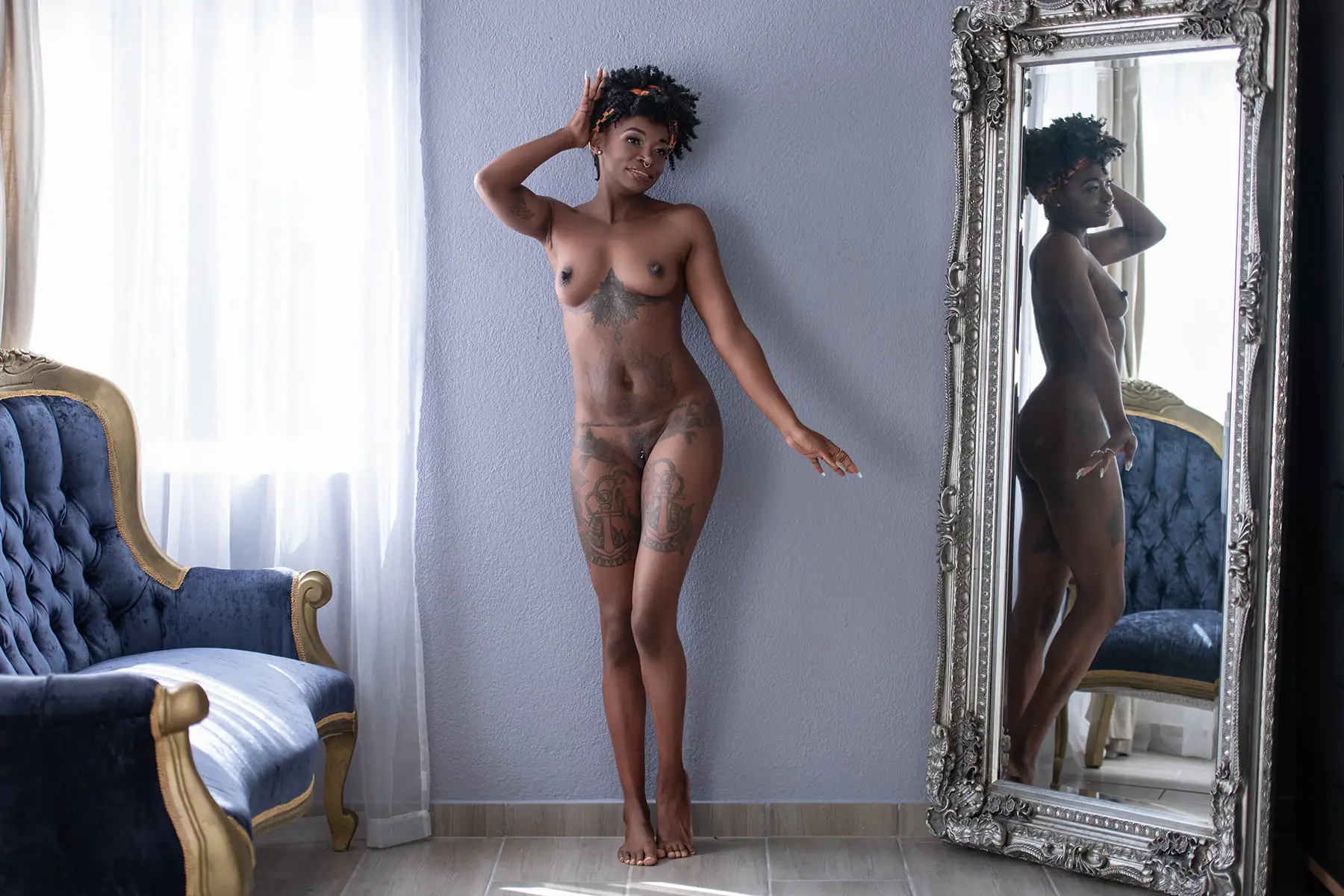
Visual consistency is often reduced to technical rules. Use the same colours. Choose three fonts. Apply the same preset. Keep the feed tidy. Those things can help, but they are only the surface.
The strongest consistency is emotional. Some creators make you feel as though you’ve entered a private world. Others feel like the friend who would get you into trouble and somehow convince you it was your idea. Some feel polished and aspirational, while others feel warm and familiar.
The strongest creator brands understand the experience they create and protect it.
Photography should strengthen that experience. If your brand is playful, photographs that suddenly feel cold and overly serious may be technically excellent but completely wrong for you. If your audience responds to elegance and mystery, chasing a loud trend may attract attention while quietly weakening what they had begun to recognise.
Experimentation still matters. Photography would become unbearably dull if every decision had already been made before somebody walked into the studio. The trick is to experiment without losing the person at the centre of the work.
I can change the lighting, the set and the way I photograph somebody, but somewhere in the finished image I still want to recognise them. The same principle applies to a creator’s brand. Your audience doesn’t need to know what you’re going to post tomorrow. They should simply feel that, whatever it is, it could only have come from you.
Becoming More Like Yourself
There is a wonderful irony in all of this. Creators spend enormous amounts of time searching for the thing that will make them different, when often the most distinctive thing they possess is the part they’ve been trying to edit out.
Perhaps their humour feels too strange, their personality too quiet or their interests too niche. Perhaps their body doesn’t resemble the current ideal, or their style doesn’t match whatever appears to be working for everybody else. So they soften the edges and borrow what appears to work.
Sometimes, they edit away the very thing people might have remembered.
I’ve photographed enough people to know that the details we’re most self conscious about are not always the details other people dislike. Sometimes they are precisely what makes somebody interesting. I believe the same is true of a creator’s work.
Consistency is not about forcing yourself into a narrow box. It is about recognising the parts of your work that genuinely feel like you and having the confidence to let people see them more than once.


Recognition takes time. One photograph reinforces another. One post reminds somebody of the last. Gradually, the audience begins to recognise something before they can necessarily explain what it is.
That is the moment content begins becoming a brand. Not when every photograph looks identical, but when the work carries a signature.
Perhaps the real challenge for any content creator trying to become unforgettable isn’t to create more, shout louder or become somebody new every time the numbers become uncomfortable. Perhaps it is to stop sanding away the very edges that made them interesting in the first place.
The creators nobody forgets are not always the loudest, the most polished or the most technically perfect. They are the ones who become so clearly themselves that eventually we recognise their presence before we even see their name.
And perhaps that is the real measure of a personal brand.
Not whether people notice you.
Whether they know it’s you.
Knowing who you are, however, is only half the conversation. The other half is understanding why your audience chooses to stay.
And that’s where we’ll go next.



Leave A Comment