Everything You Really Want to Know
About a Boudoir Shoot
The questions people ask. The questions they whisper.
And a few they usually only think about.
Will I know how to pose? What if I hate photographs of myself? Do I have to get naked? What happens if I want to? What exactly is the difference between boudoir, nude and erotic photography? Can couples do this together? Can I have a maternity shoot that feels sensual rather than looking like every other maternity photograph on the internet? And perhaps most importantly, who gets to see the photographs afterwards?
Will I know how to pose? What if I hate photographs of myself? Do I have to get naked? What happens if I want to? What exactly is the difference between boudoir, nude and erotic photography? Can couples do this together? Can I have a maternity shoot that feels sensual rather than looking like every other maternity photograph on the internet? And perhaps most importantly, who gets to see the photographs afterwards?
All perfectly sensible questions. None of them require an embarrassed cough beforehand.
I have photographed women and couples with very different bodies, personalities, reasons for being here and ideas about what they wanted to create. Some arrive excited. Some arrive nervous. Quite a few manage both simultaneously, which is an impressive piece of emotional multitasking.
What they usually discover is that a boudoir shoot is far less about being photogenic, knowing how to pose or possessing some mysterious reserve of confidence than they imagined.
My job is to take care of the photography. Your job is simply to arrive as yourself.
So this isn’t a collection of three sentence answers designed to satisfy a search engine. These are proper answers to the questions surrounding boudoir, sensual portraiture, couples photography, maternity, fine art nude and erotic photography. The practical questions, the personal ones and the occasional question people type into Google at midnight and then hastily delete from their search history.
Some answers are straightforward. Others deserve a little more thought.
And if there’s something you’ve wondered about that isn’t here, you are almost certainly not the only one.
THE QUESTIONS YOU CAME HERE FOR
CONFIDENCE
What if I hate photographs of myself?
You would be in remarkably good company. A considerable number of the women I photograph begin our first conversation by telling me precisely that.
I probably brush this off more casually than I should, because I know what usually happens next. Within the first ten or fifteen minutes the nerves begin to disappear. Then, once we have settled into the shoot, I show them a photograph on the back of the camera and very often get the same slightly suspicious response: “Is that me?”
Yes. It is. I haven’t secretly replaced you with somebody else while you weren’t looking.
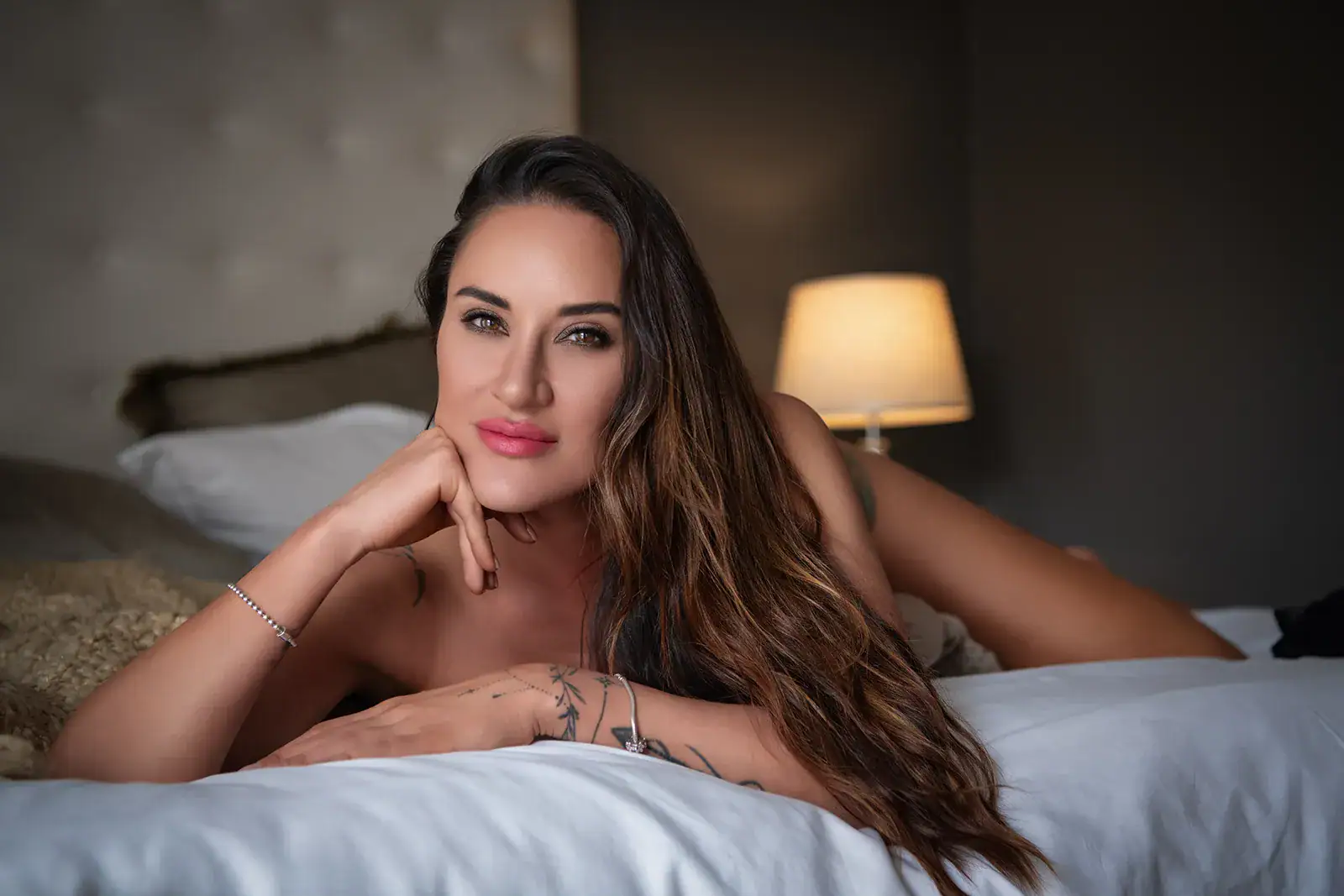
The difference is that I’m photographing you deliberately. I’m controlling the light, choosing the angles, directing you and making small adjustments as we go. You don’t need to know how to pose because that’s my job. You just need to listen to me, occasionally tolerate instructions that may sound rather odd, and trust that there is a reason for them.
So if you hate photographs of yourself, that may actually be one of the reasons you’re here. You already know what an unfortunate phone camera, bad lighting and the wrong angle can do. Let’s find out what happens when all three are no longer in charge.
I’m reasonably confident I can do better than your selfie camera.
Unless you’re a photographer, of course. Then we have an entirely different problem.
What if I don’t know how to pose?
You’re not a professional model. And if you are, you probably aren’t reading this particular question.
There are thousands of posing videos on Instagram, and you are welcome to disappear down that rabbit hole if you wish. By the time you emerge you may have memorised seventeen ways to position your hips, developed a complicated relationship with your shoulders and forgotten entirely how you normally stand.
So please don’t practise.
You don’t need to arrive knowing how to pose because I will direct you throughout the shoot. Sometimes I’ll give you a position to start with and make small adjustments from there. Other times I’ll simply watch the way you naturally move. Quite often, somewhere in the middle of that movement, I’ll see something and say, “Stop. Stay exactly there.”
Then I’ll refine it. A slight change of angle, a shift in posture, where you’re looking, perhaps the smallest adjustment that turns something good into something rather lovely.
That is what I mean by micro posing. I’m not trying to force you through a catalogue of predetermined poses. I’m looking at you, the light, your body and what is happening in front of my camera, then directing accordingly.
So there is nothing to learn beforehand and nothing to practise in the mirror.
You bring yourself. I’ll take care of the posing.
I’ve never done anything like this before. Does that matter?
The majority of people I photograph are doing this for the first time, so if your heart is already doing something slightly more energetic than usual just thinking about it, you are in very good company.
And yes, it does matter. Not because you need experience, but because this is new to you.
You may have questions you’re not quite sure how to ask. You might want a straightforward boudoir shoot, or you may be thinking about something more intimate and wondering how on earth you begin that conversation without feeling embarrassed. You may not even know exactly what you want yet.
Take a breath.
Have a proper look through my galleries. You’ll quickly discover that I’m comfortable photographing everything from elegant boudoir through to fine art nude and more intimate, erotic work. There isn’t an awkward little line you need to tiptoe towards or a secret vocabulary you’re expected to know. Tell me what you’re thinking, even if you’re not entirely sure how to say it.
My interest is remarkably simple. I want to create gorgeous photographs of you, whatever style of shoot we decide is right for you.
There is a phrase you’ll see repeated throughout my website: don’t stress, I’ll guide you every step of the way. It isn’t there because somebody once told me it sounded reassuring. It’s there because that is genuinely how I work.
You don’t need to know how any of this works before you arrive.
That’s rather the point of coming to someone who does.
I’m really nervous. Is that normal?
Damn right you are.
Taking most, or possibly all, of your clothes off in front of someone you have only recently met isn’t particularly normal behaviour for most people. I would be more surprised if you arrived without at least a few butterflies.
Most of my clients tell me they’re nervous, so we begin slowly. There is no rush, and I’ll be very aware of how you’re feeling. Usually something changes within the first few minutes, particularly once I’ve shown you a couple of photographs on the back of the camera and you realise that this might actually be rather good fun.
If you’ve chosen to include fine art nudes or nude bodyscapes, I do something that surprises people. I often photograph those first.
I’ve heard photographers say nudity should be left until the end of a shoot. My experience has taught me the opposite. If you’ve chosen to include nudity, I often prefer to photograph it earlier. Firstly, there are no lingerie straps or clothing marks on your skin. More importantly, I don’t want you spending the first half of your shoot quietly thinking, at some point I’m going to have to take everything off.
So we remove the elephant from the room. Along with, admittedly, quite a lot of the wardrobe.
With a bodyscape or two, you don’t even have to worry about what your expression is doing while you settle in. And when I’ve asked clients afterwards, they’ve told me that starting this way actually made them feel less nervous, not more.
I’ve even had clients become so comfortable that the gown is subsequently forgotten altogether and they wander around my studio naked as though this was obviously what they had planned all along.
So yes, being nervous is completely normal.
BODY & SELF IMAGE
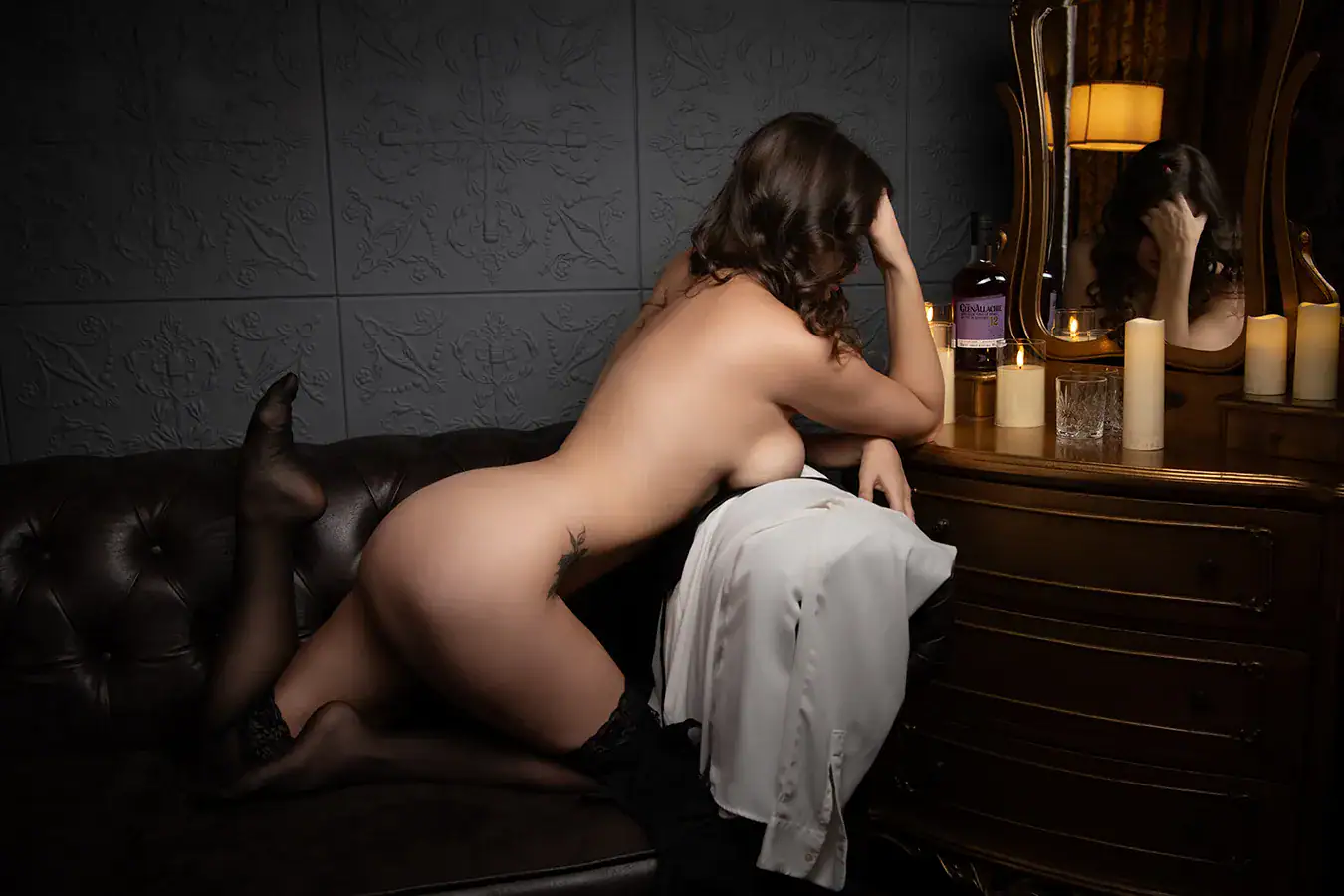
I need to lose weight first. Should I wait?
Wait for what? Most people I know who enjoy food, myself very much included, have been saying some version of “I just need to lose a little weight first” for years. For many of us, “first” has a remarkable ability to keep moving further into the future.
But let’s get to the real question. Do you need to lose weight before having a boudoir photoshoot? No. If you’re training for a bodybuilding competition, working towards a particular athletic goal or simply want to change your body for yourself, I completely understand wanting to wait until you reach that point. But for most of us mere mortals, there will probably always be something we would like to change.
Our obsession with very slim bodies is hardly some eternal rule of beauty either. Look at the women painted by Rubens or Renoir. Artists have celebrated softness, shape and curves for centuries. Rubens did it so enthusiastically that we eventually gave the English language the word Rubenesque. Photography is rather good at curves too.
The way I use light, shadow, posing and perspective isn’t about pretending your body is something it isn’t. It’s about photographing the body you have beautifully. Curves can look spectacular in photographs, and waiting until you have reached some theoretically perfect weight may simply mean putting off something you would thoroughly enjoy now.
You can, of course, lose weight first if that is genuinely what you want to do. Your body, your decision. I just wouldn’t postpone being photographed indefinitely while waiting for some future version of yourself to give the present one permission.
I could quite easily disappear into a lengthy diatribe here about bodies, beauty standards and why human beings are so extraordinarily good at finding fault with themselves, but that is probably a discussion for another platform.
You don’t have to change your body before I photograph it.
I need to lose weight first. Should I wait?
Nobody I have ever photographed has arrived with a perfect body. Then again, perfect is such a wonderfully subjective word that I’m not entirely sure what one would look like.
We tend to examine our own bodies with a level of forensic enthusiasm normally reserved for crime scenes. The scar you always notice. The stretch marks. Your stomach, arms, thighs or whatever particular bit has somehow found itself promoted to the top of your personal complaints department.
Tell me about it.
Not because we’re going to have a psychology lesson about learning to love every square centimetre of yourself, but because if I know what you’re self conscious about, I can photograph you accordingly. Lighting, posing, perspective, shadow and drapery can completely change how much attention a particular area receives. Sometimes what we don’t show is every bit as important as what we do.
Then there is retouching. Scars and stretch marks can be softened or removed if that is what you want. Temporary blemishes are straightforward, and if you wake up on the morning of your shoot to discover a pimple apparently attempting to recreate Mount Vesuvius on your chin, don’t panic. That definitely doesn’t need to become part of your permanent photographic record.
I’ve even had clients ask me to remove particular tattoos. These are your photographs, so we can discuss how much or how little retouching you want rather than simply assuming that everything you regard as an imperfection should disappear.
There is an important distinction between retouching you and redesigning you. My preference is that you still look like yourself. I want to create a beautiful photograph with lighting, posing and perspective first, then use Photoshop where it genuinely improves the finished image, rather than constructing an entirely different person afterwards.
We all have things about our bodies we would probably change if presented with a sufficiently accommodating magic wand. Fortunately, you don’t need to resolve your entire relationship with your body before having photographs taken.
Tell me what bothers you. Then let me worry about how I photograph it.
What should I wear for a boudoir photoshoot?
The first part of this answer may sound slightly strange. If possible, arrive wearing loose fitting clothing, without underwear or socks underneath. I’ve had clients arrive in a robe and slippers, which may not be the most glamorous entrance to a boudoir studio, but it makes perfect sense. Tight clothing, bras, socks and underwear can leave marks on your skin, and avoiding them gives us a clean canvas from the beginning.
For the more conventional advice about what to bring, have a look through my Experience section where I cover plenty of ideas. My general rule, though, is to bring more rather than less. We can go through everything together and decide what will photograph well and what suits the kind of images you want to create.
If your budget allows, beautiful, well made lace lingerie can be worth investing in and can photograph exceptionally well. If spending the price of a small household appliance on a French bra isn’t particularly appealing, there are plenty of inexpensive options online. SHEIN, for example, can give you several completely different looks for what you might spend on one luxury lingerie set. You certainly don’t need to arrive carrying the annual output of a Parisian lingerie house.
Colour is very personal. I particularly like reds and burgundy because they can look rich and seductive in photographs, but black and white are classics for good reason. Emerald green has looked spectacular on several of my clients, and ultimately a colour you love and feel good wearing will usually be a better choice than something somebody on the internet has declared to be correct.
You also don’t need to buy anything new. Bring pieces you already own and love. An oversized shirt, knitwear, a bodysuit, jewellery or something belonging to your partner can sometimes give us more interesting photographs than an elaborate lingerie set. And sometimes very little clothing produces the strongest photographs of all. A simple white sheet can look every bit as beautiful as lace and suspenders when it is photographed properly.
If you’re planning to include nude photographs, I suppose the packing list becomes considerably shorter. Even then, there are things we can use to change the look. Body lotion applied at the studio can give the skin a beautiful sheen under carefully controlled lighting, for example.
The important thing is not to arrive with what you think a boudoir photographer expects you to wear. Tell me what you want the photographs to feel like, bring plenty of possibilities, and we’ll work out the wardrobe from there.
Do I have to get naked?
Absolutely not.
When I started my journey into boudoir photography, only a relatively small percentage of my clients wanted to include nude or implied nude photographs. Interestingly, over the years that has almost completely reversed. Today, the majority choose to include nude or implied nude photographs in their shoot.
But that is their choice. It doesn’t have to be yours.
One of the things I want you to understand before you walk into my studio is that you decide the boundaries. You decide what you wear, what you take off and how far you want the photographs to go. That might mean beautiful lingerie, an oversized shirt, implied nudity where very little is actually revealed, fine art nudes, or something more intimate. There isn’t a point in the shoot where nudity suddenly becomes compulsory because you’ve booked a boudoir photographer.
You can also change your mind. You might arrive absolutely certain that nude photographs aren’t for you and then, once you’re comfortable, decide you’d like to try one. Equally, you might have planned to include nudity and decide on the day that you don’t want to. Either decision is perfectly fine.
The important distinction is that I can guide you creatively, suggest what I think will photograph beautifully and show you possibilities you may not have considered, but I don’t need to persuade you past a boundary you’ve set. A photograph is considerably more successful when the person in it actually wanted to create it.
That is one of the advantages of working with Boudoir Fusion Photography. There isn’t a predetermined formula for how much or how little you should wear. We decide what we’re creating together, but the boundaries are always yours.
And sometimes the most sensual photograph from an entire shoot reveals almost nothing at all.
What’s the difference between boudoir, nude and erotic photography?
I mention somewhere else on this website why I called the business Boudoir Fusion Photography. Consider finding it an Easter egg. If you find it and subsequently book a photoshoot, tell me where it is and I’ll give you an extra edited photograph on me.
Part of the reason for the name is that the boundaries between boudoir, nude and erotic photography are nowhere near as tidy as the labels suggest. Photographers can become wonderfully pedantic about definitions. Most people who contact me simply know the sort of photographs they would like to create.
So, in the simplest terms, this is how I think about them:
Boudoir is sensual. Nude is unclothed. Erotic is sexual.
There can be considerable overlap between all three. A nude photograph can be completely non erotic, while an erotic photograph may contain no nudity whatsoever. A boudoir photoshoot might begin in lingerie and wander quite happily into nude or erotic photography along the way.
I am certainly not going to stop halfway through a shoot and announce that we have crossed an important photographic border.
What matters is that I understand what you want to create, what you are comfortable with and how far you would like to take it.
If you are interested in the distinctions, I have written a fuller explanation of how I define boudoir, implied nude, nude, artistic nude and erotic photography.
How far can we go with erotic photography?
As far as you like, as long as it doesn’t put me in jail or hospital.
Erotic means very different things to different people, which is rather the point. For one person it might be an outfit, a fantasy or something mildly provocative. For somebody else it might involve a particular kink or something considerably more explicit. I’m not particularly interested in deciding what should be erotic for you.
Come to me with the idea. You don’t need to dress it up in polite language or spend twenty minutes trying to find a less embarrassing way of asking the question. Tell me what you would like to create and we can have a grown up conversation about how we photograph it.
Even if the concept involves sex or something quite explicit, my approach to the photography doesn’t suddenly change. I’m still thinking about lighting, composition, expression, shape, atmosphere and the story within the photograph. Explicit doesn’t have to mean crude. Given the choice, I will always try to make the finished photographs beautifully crafted and artistic.
There are, obviously, some boundaries. If your idea involves something I cannot or will not photograph, I’ll simply tell you. No raised eyebrow. No dramatic intake of breath. We find out what works and take it from there.
So tell me the idea first. We can worry about what to call it afterwards.
Can couples do a boudoir photoshoot together?
There are actually two questions here, so let me get the first one out of the way. You can bring someone with you to your photoshoot if you want to, provided they are over 18. That might be your partner or a friend, there to be your cheerleader, moral support or, should circumstances require it, your designated support bear.
Sometimes the person who comes along ends up having almost as much fun as the person being photographed, although admittedly they have considerably less work to do. Most of my clients choose to come alone, but if having someone you trust there will make you feel more comfortable, they are very welcome. Of course, if the photographs are intended as a surprise for your partner, bringing them along would rather defeat the object.
There is just one rule if they are there for moral support: they can’t take photographs or video during the session. I suppose I could charge them for the privilege, but that rather defeats the purpose of you coming to me for a professional photoshoot in the first place. They are very welcome to encourage, admire and occasionally make helpful noises from the sidelines. The photography, however, stays with me.
Now to the second, and rather more interesting, interpretation of the question. Can your partner actually participate in the photoshoot with you? Absolutely.
A couples photoshoot can be romantic, sensual, playful or considerably more adventurous. It depends entirely on the two of you and what you want to create. You don’t need to arrive knowing how to pose together, and you certainly don’t need to manufacture some strange photographic version of being a couple. You already know how to be together. My job is to photograph that.
Sometimes I’ll direct both of you quite precisely. At other times I’ll create the situation, give you a little direction and watch what naturally happens between you. The looks, reactions, touches and moments between two people who genuinely know each other are usually far more convincing than trying to manufacture intimacy for the camera.
And if one of you is considerably more nervous than the other, that’s perfectly normal. It can actually be rather entertaining watching which of you turns out to be the confident one once the camera comes out. It isn’t always the person either of you expected.
There is an additional fee for including your partner in the photoshoot, which you’ll find on my Pricing page. If you have something involving more than two people in mind, tell me what you’re thinking and we can discuss the shoot and any additional costs.
So bring someone as your support bear, come entirely on your own, or put your partner in front of the camera with you. They are three quite different experiences, and the choice is entirely yours.
PRIVACY & TRUST
Will my boudoir photographs be private?
Yes. Absolutely.
I will only publish photographs from your shoot if you have given me permission to do so. As part of the pre shoot questionnaire I send you, there is a model release giving you the option to allow me to use your photographs. If you leave that release unsigned, your photographs remain private. I will not use them on my website, social media or for promotional purposes.
It really is that simple.
You may, of course, change your mind later. I have had clients who initially wanted everything kept completely private and then, after seeing their finished photographs, decided they were rather too good not to share. If that happens, send me written permission, usually via WhatsApp, and we can agree exactly which photographs I may use.
If they are going onto social media, you also decide whether you want to be tagged or remain anonymous. Some clients are perfectly happy to be tagged. Others would rather their mother, employer and next door neighbour didn’t suddenly discover quite how adventurous their Tuesday afternoon had been. Both are perfectly reasonable.
There is an important principle behind all of this. You booked me to create photographs for you. Paying for a photoshoot does not automatically give me permission to show those photographs to everybody else. They are intimate photographs and I treat them accordingly.
Your privacy isn’t something you need to negotiate with me, and you certainly don’t need to wonder whether saying no to a model release is going to offend me. It won’t.
Unless you give me permission to share them, what happens in the studio stays in the studio.
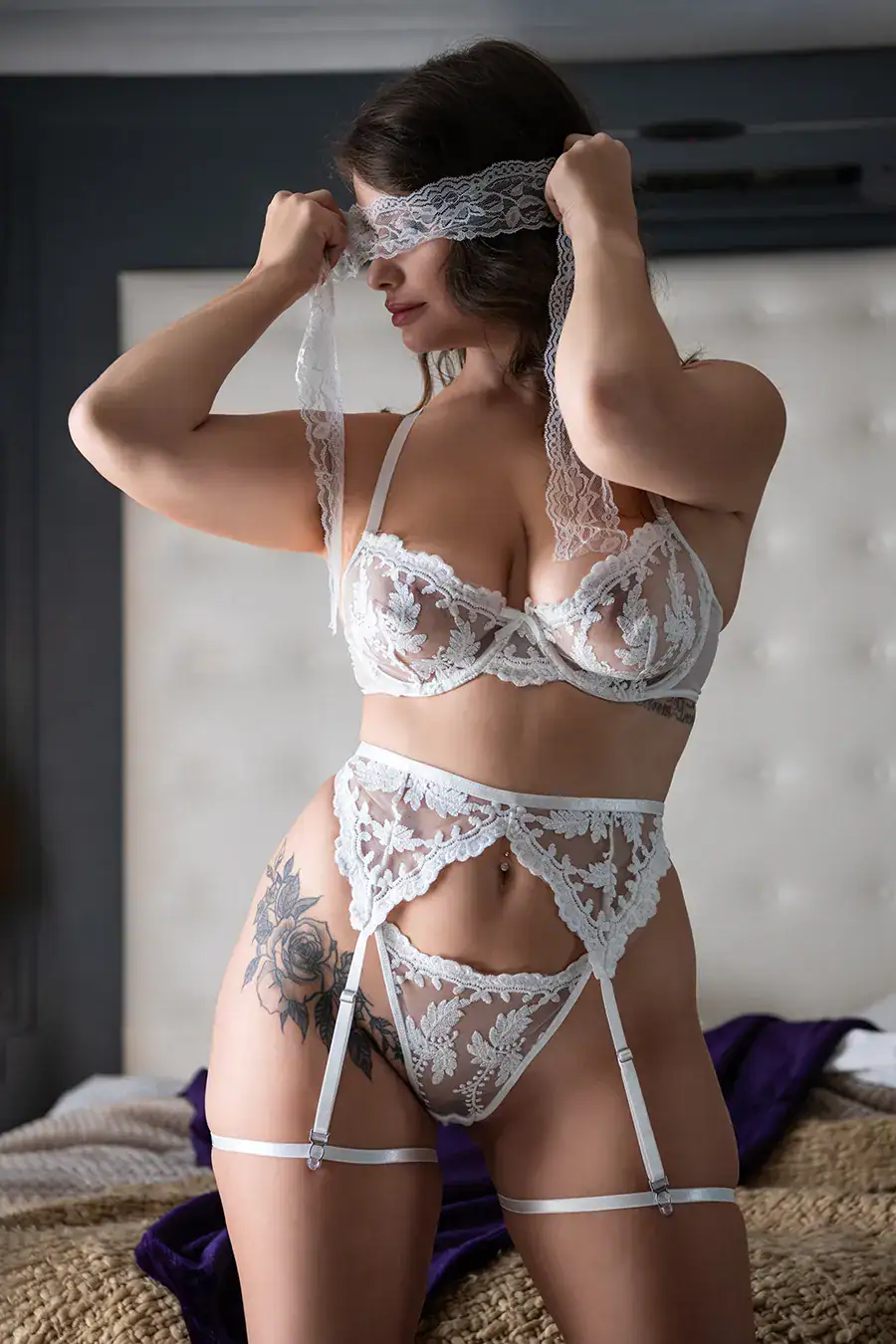
Who gets to see the photographs afterwards?
You get to decide that.
This is partly covered in the previous question, but privacy is important enough that I would rather repeat myself than leave you wondering.
If you haven’t given me permission to use your photographs, the only person who sees them from my side is me. I photograph them, I edit them and I prepare the finished images for you. They aren’t passed around the studio, sent to somebody else for retouching or quietly added to my website because I happen to particularly like one of them.
Once I deliver them to you, the decision is entirely yours.
Perhaps they are for your partner. Perhaps you want to show your closest friends. Perhaps they are entirely for you and nobody else ever needs to know they exist. That decision isn’t mine to make.
If you have given me permission to use selected photographs, then naturally those particular images may appear on my website, portfolio or social media according to what we have agreed. As I mentioned above, appearing on social media doesn’t mean you need to be named or tagged.
Boudoir photographs can be incredibly personal. Some of the images I create go considerably beyond boudoir, and I don’t become any less careful with your privacy simply because we’ve become comfortable with each other during the shoot.
I create the photographs. You decide who gets to see them.
What happens if I change my mind during the shoot?
Then you change your mind. There’s no skin off my nose.
This photoshoot is about you, and that includes your comfort levels. You may arrive with a very clear idea of what you want to photograph and discover, once we’re actually doing it, that something doesn’t feel quite right. That’s fine. We stop, change direction and move on to something else.
I will push your boundaries a little during a shoot. That is part of my job. I may suggest a pose, an outfit, a little less clothing or an idea that takes you slightly outside your comfort zone because experience tells me it could produce a fantastic photograph. But there is a considerable difference between encouraging you to try something and pushing you into something you don’t want to do.
The camera helps us here too. I show you photographs during the shoot, so you aren’t waiting until afterwards to discover where we’re going. If I show you an image and you don’t like the direction we’re taking, tell me. We change gears. No awkward conversation, no wounded photographer quietly sulking behind his camera.
The opposite happens too. You may arrive absolutely certain that something isn’t for you, become more comfortable as the shoot progresses and decide you’d like to try it after all. That’s equally fine.
Nothing we discussed before the shoot becomes a contract with your comfort zone. You are allowed to change your mind at any point.
I’ll encourage you to explore your boundaries. You decide where those boundaries actually are.
What actually happens during a boudoir photoshoot?
Far less drama than you may currently be imagining.
You will hopefully arrive wearing the loose fitting clothing we discussed earlier. If your package includes professional makeup, or hair and makeup, that is where we begin. Once you are suitably transformed without becoming an entirely different person, we’ll go through everything you’ve brought with you and decide which outfits will work best with which sets.
From there, the shoot begins. If you’ve chosen to include nude photographs, I will usually photograph those first, often beginning with Nude BodyScapes. There is method behind that apparent madness, which I’ve explained above. From there we move through the different sets, outfits and ideas we have planned. My studio is equipped for both studio lighting and natural light, when the sun is being cooperative, so we can create quite different looks without you having to go anywhere.
How many outfits and sets we photograph depends largely on the package you’ve chosen and the time we have available. I would rather create several exceptional photographs than race through seventeen outfits simply so we can say we did. Throughout the shoot I’ll direct you, adjust the lighting and posing, and show you photographs on the back of the camera so you can see what we’re creating as we go.
Once we’ve finished shooting, you can start packing up while I transfer the photographs onto my computer. These are large, high resolution files, so that normally takes around ten to fifteen minutes. Then comes the slightly cruel part. You have to choose your favourites. The number of finished photographs included will depend on your package, and the images you select are the ones I will take through my full magazine quality editing process.
Once you’ve made your selection, you’re done. You get to go home, put your feet up and wonder why you were quite so nervous about the whole thing in the first place.
If you’ve had your hair and makeup professionally done, however, going straight home seems a terrible waste. Book dinner. Go somewhere nice. Make use of it. If the photoshoot is supposed to be a surprise for your partner, you have two choices: remove the evidence before you get home or explain that you innocently wandered through the cosmetics department and somebody insisted on giving you a makeover. I accept no responsibility for the quality of that alibi.
I then disappear behind the computer for the next several days and work on your selected photographs before presenting the finished images to you electronically.
You can read more about the complete process in my Experience section, but that is essentially what happens.
You arrive nervous. We make photographs. You leave wondering what all the fuss was about.
How much retouching do you do, and will I still look like myself?
Yes. You will still look like you. My approach to retouching is to create the very best version of you, rather than turning you into somebody else.
Every photograph you choose receives professional retouching. I remove temporary blemishes and pimples, reduce pigmentation, even out skin tone and carefully polish the image while retaining natural skin texture.
If you would like me to go further, I can. Most of my clients ask me to soften fine lines and wrinkles, reduce the appearance of cellulite and make subtle refinements to areas they may feel self conscious about. I can also make slight body shaping adjustments where requested.
The key is subtlety. I do not want to change who you are or create an artificial version of you. The finished photograph should still unquestionably be you.
My style is to create polished, magazine quality portraits while keeping them believable and elegant. The photographs you see throughout my portfolio are representative of the style, finish and quality you can expect to receive.
And ultimately, you decide how much or how little retouching you would like.
Is there an age limit for a boudoir photoshoot?
Yes, there is a minimum age. You must be 18 or over to have a photoshoot with me. At the other end of the scale, there is no upper age limit. The oldest client I can remember photographing was in her mid seventies.
I am often asked, “Am I too old for this?” I think there is a better question to ask: what do you want to get from the experience?
Perhaps you want to feel sexy and sensual again. Perhaps you want to see yourself differently. Maybe you have reached a point in your life where you are more comfortable in your own skin than you were twenty years ago. Or perhaps you simply want some gorgeous photographs of yourself while you have the opportunity to do it.
I don’t believe there is an age limit on feeling attractive, sensual or good about yourself. Those things don’t suddenly expire because another birthday has appeared on the calendar.
Your photoshoot should reflect who you are now, rather than trying to recreate who you were at 25. That is far more interesting to me as a photographer.
So yes, there is an age limit at one end: 18. At the other end, there isn’t one.
What should I do to prepare for my boudoir photoshoot?
Preparing for your photoshoot is reasonably important, but please don’t turn the week beforehand into some sort of military operation. There are a few simple things you can do that will make a difference to how you feel on the day and how your photographs look.
If hair styling is included in your package, arrive with clean, loose hair and without loads of product in it. If you are doing your own hair, arrive with it styled in the way you would like to be photographed. The same applies to makeup. If makeup is included in your package, have a look through the Experience section of my website beforehand where you will find some ideas and inspiration. This will help you brief the makeup artist on the look you want. If you are doing your own makeup, arrive with it completed in your preferred style.
Pay some attention to your hands and feet. They appear in photographs far more often than you might imagine. Make sure your nails are clean and manicured and that your feet are clean, smooth and moisturised. I recommend having a professional manicure and pedicure if your budget allows. A classic French manicure always looks elegant, but reds, burgundies and other colours that suit you can look stunning too. Personally, I would avoid having every finger and toe painted a different colour unless we are deliberately creating a concept where the rainbow is part of the plan.
Bring a pair of loose slippers to wear between sets so your feet stay clean, and throw a couple of wet wipes into your bag as well. Bare feet and studio floors have an uncanny ability to find one another.
If you would like a tan, I strongly recommend having a professional spray tan rather than experimenting at home just before your shoot. Home tans have an unfortunate habit of leaving streaks, uneven colour and telltale staining around the hands and feet, all of which the camera is remarkably good at finding. A tan is certainly not required, but a good one can photograph beautifully if that is the look you want.
During the week leading up to your shoot, drink plenty of water, gently exfoliate and moisturise your skin regularly. Try not to drink too much alcohol the night before. Apart from the possibility of arriving at my studio wondering why somebody has made the lights quite so unnecessarily bright, alcohol can dehydrate you, and that can show in your skin and particularly around your eyes.
On the morning of your shoot, don’t skip breakfast. Have a light meal that will keep your energy levels up and avoid anything you already know makes you feel bloated. A photoshoot can be surprisingly physical once I start posing you, so arriving hungry is not a particularly good strategy.
Pack your bag the day before. Bring everything you are considering wearing, together with your shoes, jewellery, accessories and anything else you think we might be able to use. I would much rather you arrive with too much than discover that the one thing that could have made a fantastic photograph is sitting at home in your cupboard. There are plenty of suggestions about what to bring in the Experience section of the website, so use that for ideas when you are packing.
When you travel to the studio, wear the loosest fitting clothing you reasonably can, and avoid tight underwear and socks where possible. Tight clothing can leave marks across your skin that take time to disappear. I have even had clients arrive in a robe and slippers, which may earn you a few interesting looks on the journey but works remarkably well once you get here.
Most importantly, don’t spend the week before your photoshoot panicking about it. You do not need to diet for three days, reinvent yourself, practise posing in front of the bathroom mirror or somehow become photoshoot ready. Do the sensible preparation, pack your bag the night before, get a decent night’s sleep and look forward to the experience.
The preparation is your part. Once you arrive at the studio, the rest is mine.
Can I have a boudoir photoshoot while pregnant?
Not only can you have a photoshoot while you are pregnant, I actively encourage it. Pregnancy is such a relatively short chapter of your life, so let’s create some wonderful photographs of it while we can.
Where possible, I encourage my clients to leave their maternity photoshoot until reasonably late in the pregnancy. The bigger and more defined your bump, the more we have to work with photographically. I have even photographed one client the day before her planned Caesarean, although I am certainly not suggesting that everyone needs to cut the timing quite that fine.
You can choose how you would like to be photographed. Your maternity shoot can be boudoir, fine art nude, implied nude or a combination of styles. Beautiful fabrics and drapery can work particularly well, and sometimes the simplest photographs, where the shape of your body and your bump become the focus, are the strongest.
And please feel free to bring your partner. We can create some beautiful photographs of the two of you together as part of the experience. After all, while you are doing considerably more of the work at this particular stage of proceedings, they did have something to do with you being there.
When it comes to posing, I will adapt everything to show off your bump rather than hide it. The lighting, angles and poses will be chosen to emphasise the shape of your pregnant body and create photographs that are both flattering and beautiful.
I will also be particularly conscious of your comfort. The last few weeks of pregnancy can be uncomfortable enough without a photographer deciding you should spend twenty minutes twisted into an elaborate pose. We work at your pace. If you need to sit down, change position, take a break or simply say that something isn’t comfortable, we adjust and carry on.
There is no expectation that you should move or pose in the same way as somebody who isn’t pregnant. The photoshoot is built around you, your body and how you are feeling on the day.
Your bump is temporary. The photographs won’t be.
During the week leading up to your shoot, drink plenty of water, gently exfoliate and moisturise your skin regularly. Try not to drink too much alcohol the night before. Apart from the possibility of arriving at my studio wondering why somebody has made the lights quite so unnecessarily bright, alcohol can dehydrate you, and that can show in your skin and particularly around your eyes.
On the morning of your shoot, don’t skip breakfast. Have a light meal that will keep your energy levels up and avoid anything you already know makes you feel bloated. A photoshoot can be surprisingly physical once I start posing you, so arriving hungry is not a particularly good strategy.
Pack your bag the day before. Bring everything you are considering wearing, together with your shoes, jewellery, accessories and anything else you think we might be able to use. I would much rather you arrive with too much than discover that the one thing that could have made a fantastic photograph is sitting at home in your cupboard. There are plenty of suggestions about what to bring in the Experience section of the website, so use that for ideas when you are packing.
When you travel to the studio, wear the loosest fitting clothing you reasonably can, and avoid tight underwear and socks where possible. Tight clothing can leave marks across your skin that take time to disappear. I have even had clients arrive in a robe and slippers, which may earn you a few interesting looks on the journey but works remarkably well once you get here.
Most importantly, don’t spend the week before your photoshoot panicking about it. You do not need to diet for three days, reinvent yourself, practise posing in front of the bathroom mirror or somehow become photoshoot ready. Do the sensible preparation, pack your bag the night before, get a decent night’s sleep and look forward to the experience.
The preparation is your part. Once you arrive at the studio, the rest is mine.
What if I have my period on the day of my photoshoot?
This may be an embarrassing question for some women to ask, but it really doesn’t need to be. If you don’t mind, I don’t mind. Menstruation is simply one of those things that happens, and from my point of view as a photographer, it is no big deal.
The majority of clients who have unexpectedly started their period before a photoshoot have chosen to continue with it. You may feel slightly bloated, uncomfortable or simply not quite at your best, and I understand that. We can adapt the way I pose and photograph you, take things at your pace and work around how you are feeling on the day.
If you have booked a more intimate nude or erotic photoshoot, you may understandably feel differently about continuing. We can make that decision on the day. If you are uncomfortable with what we originally planned, we can change the direction of the shoot or, where necessary, discuss rescheduling it.
There may be costs involved in changing the date at very short notice. For example, if I have already booked a makeup artist or hair stylist specifically for you, their fee may still need to be covered. I will always discuss that with you rather than there being an unpleasant surprise afterwards.
If you have a reasonably good idea of your cycle and know that you suffer from particularly uncomfortable cramps, bloating or simply don’t feel like being photographed during that time, it makes sense to book your photoshoot for a date when you are unlikely to be menstruating. There is no prize for making the experience unnecessarily difficult for yourself.
And if you are having a nude photoshoot and are wearing a tampon, please don’t be embarrassed if the string happens to be visible. I may simply ask you to tuck it away before I take the photograph. I have had that conversation several times before and can assure you it is considerably less dramatic than you are probably imagining.
Most importantly, I will always be discreet. You don’t need to apologise, explain yourself or feel embarrassed. We simply deal with it appropriately and carry on creating photographs.
What if I have an injury, disability or limited mobility?
Let’s begin with the most important thing: tell me what you can and cannot comfortably do, and we will work around that.
There is no list of poses you have to perform in order to have a successful photoshoot. If you cannot kneel, arch your back, lie on the floor, stand for long periods or move easily between positions, tell me. I will adapt the posing, lighting and sets around what you can do rather than asking you to struggle through something you can’t.
The same applies if you have an injury, chronic mobility restriction or simply need more time moving from one position to another. We are not working against a stopwatch trying to complete some predetermined catalogue of poses. The photographs need to work for you, not the other way around.
If you need someone to help you physically during the shoot, they are very welcome to come with you. They can assist you getting changed, moving between sets or with anything else you may need. As with anyone accompanying you to the studio, they simply need to be over 18.
The most useful thing you can do is tell me beforehand. Not because it is a problem, but because the more I know before you arrive, the more I can think about which sets, poses and lighting will work particularly well for you.
There are usually many different ways to create a beautiful photograph. We simply find the ones that work with your body and your mobility.
Can you photograph me at my home, a boutique hotel or another location?
I certainly can, and I have done plenty of photoshoots away from my studio over the years. I have photographed clients in their homes, boutique hotels, forests, game farms and some rather more unusual locations. If you have a unique location in mind, tell me about it. As long as it is safe and practical, we will make a plan.
And by location, I don’t necessarily mean somewhere around the corner. I have travelled for photoshoots in the USA, UK, Spain, France, Seychelles, Mauritius and Mozambique, as well as Kruger Park and a few other private game lodges, Cape Town, Port Elizabeth, Durban and a few other locations around South Africa that, for reasons of client privacy, will remain undisclosed.
There are obviously additional costs when I travel specifically for you. There will be a travel fee and you will need to cover the associated expenses such as flights or other transport, accommodation, meals and any costs associated with the location itself. We will discuss all of this beforehand, so you know exactly what is involved before anybody starts booking aeroplane tickets.
There is also a clever way of making a destination shoot considerably more economical. I have had a client get five of her friends together for an out of town shoot. Each woman had her own private photoshoot, but they shared the travel, accommodation and other expenses between them. If several of you would like to do this, talk to me. We can create a couple of days of individual shoots and spread the cost of getting me there between everyone.
If you are suggesting an outdoor location outside Johannesburg, I will probably need you to do some of the initial scouting for me. I need to know that we have permission to photograph there where necessary, that we can actually get to the location with my equipment and, most importantly, that it is safe. I am rather fond of my camera equipment, but your safety and mine come considerably higher up the list.
I learnt that lesson many years ago when, being somewhat younger and perhaps blessed with rather more enthusiasm than common sense, I photographed a client in an abandoned multi storey factory. Security gave us permission to enter and the building was photographically magnificent. The floorboards, however, creaked with the sort of enthusiasm that makes you contemplate whether the photograph you are about to take is really worth unexpectedly visiting the floor below.
We created some stunning images, but looking back, I am not entirely sure I would do it again.
We also discovered that abandoned factories apparently come with their own wildlife. In our case it took the form of a Peeping Tom, whom we had to chase out of the building. He departed rather rapidly, presumably having concluded that being pursued by an irritated photographer carrying several kilograms of camera equipment was not part of the viewing experience.
It makes a good story now. At the time, somewhat less so.
So yes, your photoshoot can happen almost anywhere. Your home can be wonderfully personal, a boutique hotel can give us an entirely different atmosphere, and an unusual location can become as much a part of the photograph as you are.
Bring me the idea. We’ll work out how to photograph it safely.
How long will it take to receive my finished photographs?
I officially allow 14 to 21 working days for your finished photographs. That gives me enough time to edit everything properly and also allows for the occasional unforeseen snag that life has an irritating habit of introducing at precisely the wrong moment.
In reality, particularly during my quieter periods, you will often receive your photographs within a few days of your photoshoot. I know how excited clients are to see the finished images, and I don’t particularly enjoy making you wait either. I will always do everything I reasonably can to get them back to you as soon as possible without compromising the quality of the editing.
In fact, where time allows, I will often try to get one or two finished photographs to you on the same day as your shoot. Consider them a little preview of what is coming while I disappear into Photoshop and get to work on the rest.
If you have left things rather late and suddenly realised that the birthday, anniversary or wedding for which these photographs are intended has not had the courtesy to move itself further down the calendar, don’t panic. I offer a premium rush editing service where circumstances allow, which can move your photographs to the front of the editing queue.
If you know you have a particular deadline, tell me when you book. The earlier I know about it, the easier it is for me to plan around it.
So while I ask you to allow 14 to 21 working days, my intention is always much simpler: get your photographs beautifully finished and back to you as quickly as I can.
Do I need a special reason to book a boudoir photoshoot?
Nope. Many of my clients simply tell me they are doing it for themselves, and I think that is as good a reason as any.
Of course, boudoir photographs can make a rather extraordinary gift. I have photographed clients celebrating birthdays, anniversaries, milestone ages, fitness achievements, weight loss and all sorts of moments in their lives that they wanted to remember. And if your partner is one of those infuriating people who seems to have everything already, photographs of you are something they are unlikely to have ordered for themselves.
They can also make a wonderful wedding gift for the groom, which reminds me of one particular client.
This was before social media had made the covert movement of photographs quite so complicated. My client wanted to surprise her groom on their wedding day, so we planned the operation with the sort of attention to detail normally associated with a minor bank robbery.
We created a beautiful coffee table book of photographs from her shoot, including images of her wearing the lingerie she would be wearing beneath her wedding dress. The Maid of Honour was recruited into the conspiracy and given one important assignment: deliver the book to the groom while he was getting ready.
The wedding photographer had been briefed too. His job was to photograph the groom as he opened the book and capture his reaction as he realised exactly what he was looking at.
I have always wondered what went through his mind when she eventually walked down the aisle towards him. He had just been looking at photographs of the lingerie that he now knew was underneath that wedding dress. Maintaining the solemn dignity appropriate to the occasion may have required slightly more concentration than usual.
There was, however, one final and rather important instruction for the Maid of Honour: get the book back. You have created a private wedding present for the groom, not unexpected entertainment for the best man and the rest of the wedding party.
Another client came to me because her husband travelled regularly. Rather than creating a single gift, she had enough photographs taken to send him a different morning and evening photograph while he was away. I rather liked that idea. The photoshoot became a gift that kept arriving.
But gifts, weddings and milestones are simply reasons you can have a photoshoot. They are certainly not reasons you need one.
You don’t need a birthday. You don’t need an anniversary. You don’t need to have lost weight, reached a particular age or achieved some great milestone. And you certainly don’t need a partner waiting at the other end of it.
Sometimes “I’m doing this for myself” is the entire reason.
And perhaps that is the best gift of all.
What should I look for when choosing a boudoir photographer?
Choosing a boudoir photographer is a little different from choosing someone to photograph your office Christmas party. You may be standing in front of this person wearing very little, or possibly nothing at all, so being able to take a good photograph is only part of the job.
Start with the photographer’s portfolio. Do you actually like their style? Look through enough of their work to see whether the quality is consistent rather than being persuaded by three spectacular photographs on a homepage. If you are considering nude or erotic photography, look specifically for examples of that work. Not every boudoir photographer offers nude or erotic photography, and there is nothing wrong with that, but if it is something you would like to explore, you need to know that the photographer is both comfortable and experienced with it.
I would also look for originality. Does the photographer have a recognisable style of their own, or does the portfolio look suspiciously like a collection of photographs you have seen elsewhere?
I have a slightly unusual perspective on this because several of my photographs have turned up on other photographers’ websites and social media, both locally and internationally. Google once alerted me to a photographer claiming that I was using their photograph. A model release and the original EXIF data brought that particular conversation to a fairly rapid conclusion.
More recently, I found one of my photographs on Instagram accompanied by another photographer’s explanation of how they had created it. This was particularly impressive because the model had worked predominantly with me and the dress in the photograph had actually been made for my studio. Apparently photographic technique has now advanced to the point where you can create an image without being anywhere near the camera.
Then look at experience, particularly if you are considering nude or erotic photography. There needs to be an enormous amount of trust between you and the person behind the camera. You should feel that they know what they are doing, understand boundaries and can make you feel comfortable in what is, for most people, a very unfamiliar situation.
Find out where the photoshoot takes place and who will be there. Is it a legitimate studio or location? Who else has access to the space during your session? Can you bring your partner or a friend if that makes you feel more comfortable? My studio is listed on Google Maps and, unless the shoot is intended as a surprise, I actually encourage clients to bring their partner if having them there will make the experience easier. If a photographer tells you categorically that nobody may accompany you, I would at least ask why.
Privacy should be a major consideration. Ask who will have access to your photographs, where the files are stored and whether any of them can be published without your permission. Is there a proper model release? Particularly with intimate photographs, you should understand exactly what you are agreeing to before the camera comes out of the bag.
The same applies to retouching. Is it done by the photographer or sent to somebody else? If it is outsourced, that means another person may have access to your images, which you are entitled to know. Are the beautifully polished photographs in the portfolio genuinely representative of what you will receive, or are you paying extra afterwards to get that level of finish?
Then, inevitably, there is price. I completely understand why people compare prices, but make sure you are comparing the same thing. How long is the shoot? How many sets can you use? Is hair and makeup included? How many finished photographs do you receive? What level of retouching is included? Are there additional charges that only appear once you have already had the photoshoot?
One photographer offering twenty edited photographs is not necessarily giving you better value than another offering ten. Twenty badly photographed or badly edited images are still twenty badly photographed or badly edited images. Quantity is a rather poor substitute for quality.
Finally, and I think this is particularly important, talk to the photographer before you book. Ask questions. Tell them what you are thinking about doing, particularly if you are considering something more intimate. See how they respond. You don’t have to become lifelong friends, but you should feel comfortable talking to them.
A magnificent portfolio is important, but if something about the conversation makes you uncomfortable, pressured or simply gives you that little voice in the back of your head saying I’m not sure about this, listen to it.
After all, you aren’t just choosing the photographs. You are choosing the person who will be standing behind the camera while those photographs are being created.
Choose someone whose work you love, whose experience you trust and, perhaps most importantly, someone you are comfortable enough with to forget about the camera for a while.
How do I book a boudoir photoshoot with Boudoir Fusion Photography?
Booking your photoshoot is really easy. You can call or WhatsApp me on 082 570 5763, email me at info@bfophoto.co.za, send me a message through Instagram, or simply complete one of the enquiry forms on this website.
And if you are still not entirely sure which package you want, what sort of photographs you would like to create, or whether boudoir photography is even for you, talk to me first. You don’t need to have all the answers before you make contact. That is partly what the conversation is for.
Once we have agreed on a date, a non refundable booking fee is required to secure it. This is not an additional charge and is deducted from the price of your chosen package. If your package includes professional hair and makeup, this also allows me to secure the hair and makeup artist for your session.
We can pencil a date into the diary while we are discussing your shoot, but please remember that the date is not secured until the booking fee has been paid. Until then, it remains available to another client.
Most clients will have chosen their package by this stage because I need to allocate the appropriate amount of studio time. You are not necessarily locked into that decision forever, though. If you decide before your shoot that you would like to upgrade your package, talk to me and, where time allows, we can make the necessary arrangements.
I generally like to start my photoshoots at around 10am. There is some method behind this. It gets you through the worst of the Johannesburg morning traffic without arriving at my studio having spent an hour discussing the shortcomings of other motorists with your steering wheel. It also gives me time that morning to prepare the studio specifically for your shoot. If you need a different starting time, just let me know and we can discuss it.
The balance of your package is due the evening before or the morning of your photoshoot.
Once your booking is confirmed, I will send you a pre shoot questionnaire. This gives me more information about you, what you would like from the session, your ideas, preferences and anything you think I should know before you arrive.
The questionnaire also includes a model release, but completing that part is entirely your choice. If you give me permission, selected photographs may be used on the Boudoir Fusion Photography website, and photographs suitable for social media may be used on my social media channels. If you don’t complete the model release, your photographs remain completely private. Booking a photoshoot does not automatically give me permission to publish your images.
Then all that remains is to prepare for the day, pack your bag and arrive at the studio. By that point I will already know quite a bit about what you want to achieve, and we can go through the final details together before we start.
There is one thing I would like you to remember after reading all 26 of these questions:
If you are unsure about anything, please ask me.
There really isn’t a silly question, and if it matters enough for you to be wondering about it, it matters enough for us to talk about it. You don’t need to know how to pose, you don’t need to have the perfect body, you don’t need to know exactly what you want to wear, and you certainly don’t need to arrive pretending you aren’t nervous.
That’s my job. Yours is simply to make the first call.
How much does a boudoir photoshoot cost in Johannesburg?
The cost of a boudoir photoshoot in Johannesburg can vary considerably depending on the photographer, the length of the session, whether professional hair and makeup is included, and how many professionally edited photographs you receive.
At Boudoir Fusion Photography, boudoir experiences currently start from R2,950. I offer different options depending on how much time you would like in the studio, the number of outfits and sets you would like to explore, whether you would like professional hair and makeup, and the number of finished photographs you would like to receive.
When comparing prices, I would look beyond the headline figure. Ask what is actually included. How long is the shoot? Is professional hair and makeup included? How many finished photographs will you receive? Are those photographs professionally retouched? Are there additional charges afterwards?
You can see my current packages and exactly what each includes on the Boudoir Photography Prices page. If you are unsure which option would suit you, talk to me first. You don’t need to choose a package before asking questions.
Should I shave or wax before a boudoir photoshoot?
Only if you normally would. There is absolutely no requirement to shave or wax before a boudoir photoshoot.
If you prefer to remove body hair, I would suggest doing whatever is already part of your normal routine rather than trying something completely new just before your shoot. Waxing, shaving or using a new product can sometimes leave the skin irritated or red, which is probably not the look you had planned for your photographs.
If you are going to wax, give your skin enough time to settle before the photoshoot. If you shave, doing it the evening before rather than immediately before the session can also help reduce visible irritation.
And if you don’t normally remove body hair, you don’t need to start for a boudoir shoot. Come as you are comfortable. There isn’t a particular way your body is supposed to look before you walk into my studio.