What’s the Difference Between Boudoir, Nude and Erotic Photography?
People don’t always know what to call the photographs they want. And, to be fair, photographers don’t always agree on the terminology either.
I have always thought there is an enormous difference between simply showing a naked body and creating a photograph that makes you want to keep looking at it. Light, shadow, pose, expression and what we choose not to show can be every bit as important as what appears in the photograph.
Over the years I have developed my own way of describing the different styles I photograph at Boudoir Fusion: boudoir, implied nude, nude and erotic photography. These are our definitions rather than a set of industry rules carved in stone. Another photographer may describe them slightly differently, and that’s perfectly fine.
Most people who contact me aren’t particularly interested in debating photographic terminology anyway. Someone will enquire about a boudoir photoshoot and, once we start talking, tell me she would also like some nude or erotic photographs. I’m certainly not going to correct her vocabulary. I want to understand what she actually wants to create.
That’s really the purpose of these definitions. They give us somewhere to start the conversation.
And sometimes one photoshoot wanders quite happily through several of them.
Where Does Boudoir Fit In?
Boudoir is probably the broadest term of the lot.
It doesn’t automatically mean lingerie, and it certainly doesn’t automatically mean nudity. I have photographed boudoir in an oversized shirt, a bodysuit, beautiful lingerie, a strategically placed sheet and with nothing at all.
What makes it boudoir for me is the intimacy of the photograph. It is personal, sensual and usually created around the person rather than around a fashion product or an abstract study of the body.
A boudoir photoshoot can remain relatively conservative from beginning to end. It can also begin in lingerie and gradually become nude or considerably more daring.
There isn’t a bell that rings when we’ve officially left boudoir.

Implied Nude: Sometimes What You Don’t See Is the Point
Implied nude photography is exactly what the name suggests. The person may be completely naked, but the photograph doesn’t show everything.
A shadow, the position of an arm, the turn of the body, a sheet or simply the camera angle can conceal intimate areas while still making it perfectly obvious that the person is nude.
I enjoy implied nude photography because it makes the viewer participate. Your eye knows there is more outside the frame or hidden in the shadows, and your imagination quietly fills in the rest.
Sometimes showing less creates a considerably more sensual photograph than showing everything.

Nude Photography: When Nothing Needs to Be Hidden
Full nude is more straightforward. The body is shown without deliberately concealing nudity.
That does not automatically make the photograph erotic.
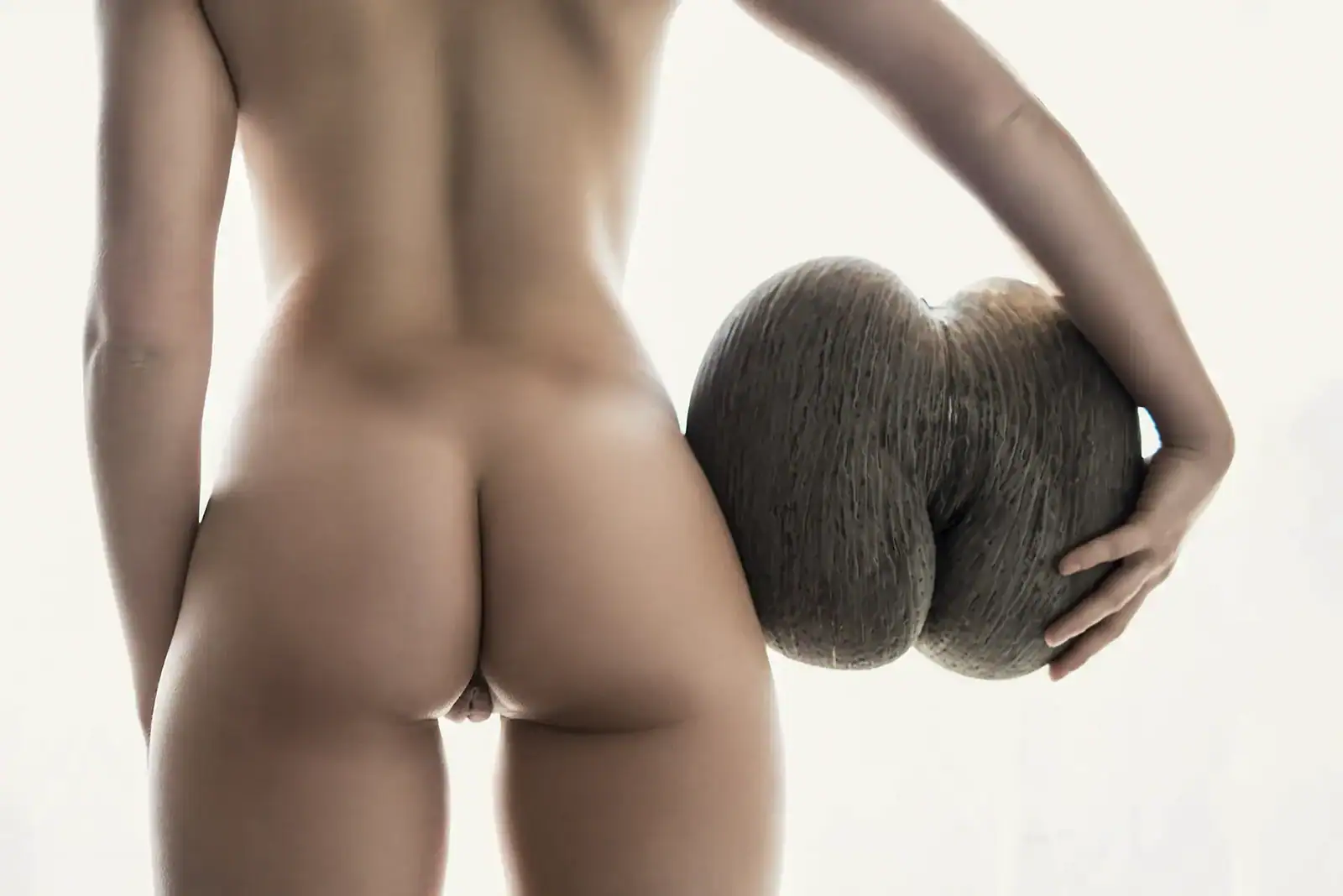
This is where people often confuse nudity with sexuality. A fully nude photograph can be quiet, sculptural and almost abstract. The body becomes shape, line, skin and light.
Equally, a photograph showing considerably less can feel much more sexual.
The amount of body visible doesn’t determine the mood of the photograph. How we photograph it does.

Artistic Nude: When the Body Becomes the Composition
Artistic nude photography is where I become particularly interested in light.
The person is still important, of course, but I am also looking at what the body does inside the frame. The curve of a back, the line through a hip, the way light catches one part of the body while another disappears completely into shadow.
Sometimes you can look at an artistic nude for a moment before you quite work out what part of the body you are seeing.
Those photographs are less about revealing somebody and more about using the human form to make the photograph itself.
It can be delicate. It can be dark. It can be strange. It certainly doesn’t have to be polite.

Erotic Photography: When Sexuality Is Part of the Photograph
Erotic photography is different because sexuality is no longer incidental. It is part of the intention of the photograph.
And that doesn’t necessarily mean explicit.
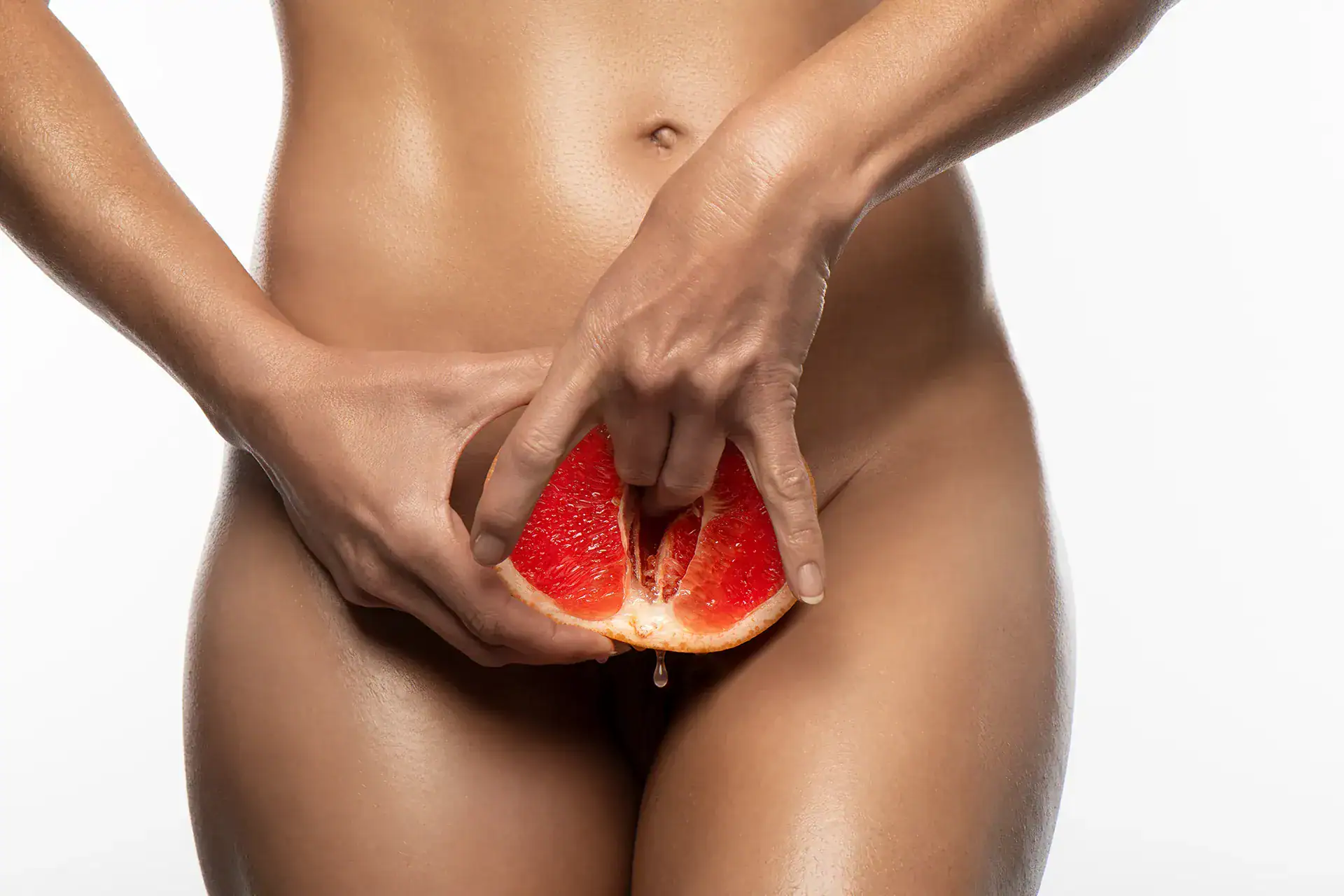
An expression, the position of a hand, eye contact, clothing, a particular pose or the suggestion of what might happen next can make a photograph intensely erotic without showing very much at all.
At the other end of the spectrum, erotic photography can be considerably more revealing.
What matters to me is that it feels intentional. There is a difference between a photograph containing nudity and a photograph that is deliberately exploring sexuality.
One shows a naked body. The other wants you to feel something about it.

And When Does Erotic Become Explicit?
There is another line beyond erotic photography where suggestion gives way to explicit sexual imagery.
I make that distinction because people sometimes use “erotic” when they actually mean something much more explicit, and there is nothing particularly useful about pretending they are the same thing.
Explicit photography may depict sexual activity or intimate detail directly rather than suggesting it. At that point the intention, boundaries and conversation before the camera comes out become particularly important.
I am comfortable discussing what somebody wants to create without embarrassment or euphemism. I’d much rather know exactly what you mean than spend twenty minutes having a very British conversation in which neither of us actually says it.
The label matters considerably less than making sure we both understand the photographs you want to create.
So What Do You Ask For When You Book?
Whatever feels closest to what you have in mind.
You can tell me you want boudoir but might like to explore some nude photographs. You can tell me you love artistic nude but don’t want anything erotic. You can tell me you want something considerably more provocative.
Or send me a few photographs that explain it better than words do.
You don’t have to choose a category before the shoot and remain inside it once we start photographing.
The important thing isn’t knowing the correct label. It is knowing what you would love to see when I eventually turn the camera around and show you what we have made.

Leave A Comment