Everything You Need to Know About Boudoir Photography
Can anyone really know everything about anything? I highly doubt it. There is usually somebody lurking somewhere who knows something you don’t, and photography has a particularly efficient way of reminding you of this just when you think you’ve finally got the hang of it.
So perhaps a more accurate title would be Everything I Have Learned So Far About Boudoir Photography. It is slightly less impressive, admittedly, but considerably more truthful.
I have been a boudoir photographer in Johannesburg for more than 15 years, photographing everything from elegant boudoir and sensual portraiture to fine art nude and erotic photography, and I’m still learning. What follows is what those years behind the camera have taught me about boudoir photography, the people who book it, the photographs we create and why I’m still not entirely convinced that everybody agrees on what the word boudoir means in the first place.
If you had asked me when I started to explain boudoir photography, however, we would have had a much shorter conversation. I had absolutely no idea what it was.
Before Boudoir, There Were Fish
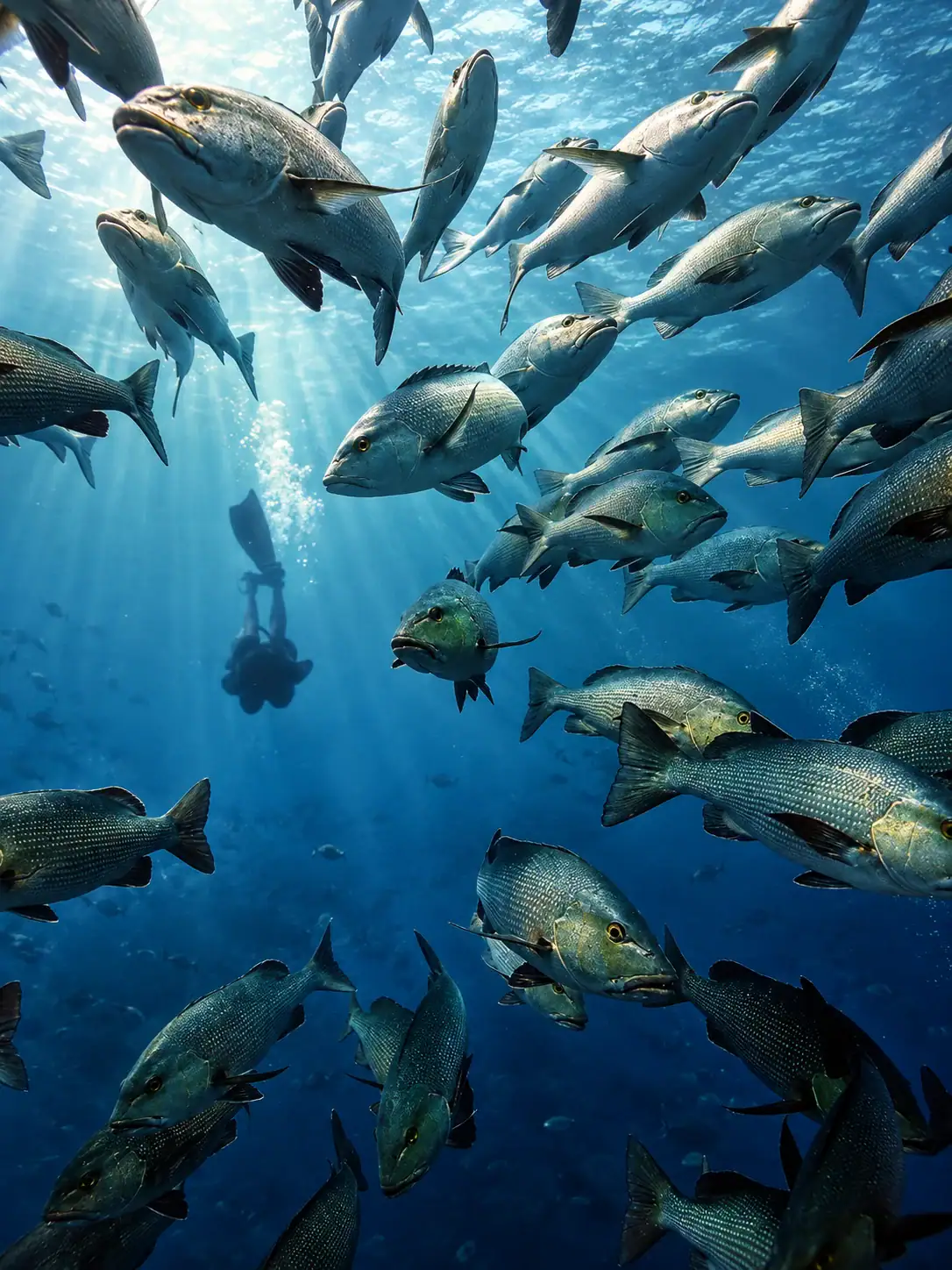
At the time, much of my life revolved around scuba diving. I spent a number of years in the diving industry, and photography was already an important part of that world for me. I was fortunate enough to dive and photograph in some of the world’s most remarkable diving destinations, particularly across Africa and the Middle East, with dives taking me further afield to the UK, USA, Greece, Italy and Spain. I did a great deal of underwater photography as well as scuba lifestyle photoshoots, and many of my images were published in magazines, newspapers, training bulletins, manuals and other industry material.
It was a wonderful way to learn photography because underwater you have the added complication that almost everything you thought you understood about light suddenly behaves differently, your subject frequently refuses to take direction, and occasionally tries to swim away.
I was also, apparently, something of a workaholic. A friend suggested that I needed a hobby, which seemed reasonable enough, so I bought some studio lights.
There was only one minor flaw in the plan. I had absolutely no idea what I was going to do with them and, if I am being completely truthful, I wasn’t entirely certain how they worked either. So I did what any aspiring studio photographer with expensive new equipment and no discernible plan might do. I put them in the garage, where they remained for a few years.
I had successfully acquired all the equipment necessary for a hobby while carefully avoiding acquiring the hobby itself.
Then a Friend Had a Boudoir Photoshoot
Eventually, a friend of mine went for a boudoir photoshoot. I saw the photographs afterwards and was fascinated, not only by the images themselves, but by her reaction to them and her husband’s reaction to them. Something clicked.
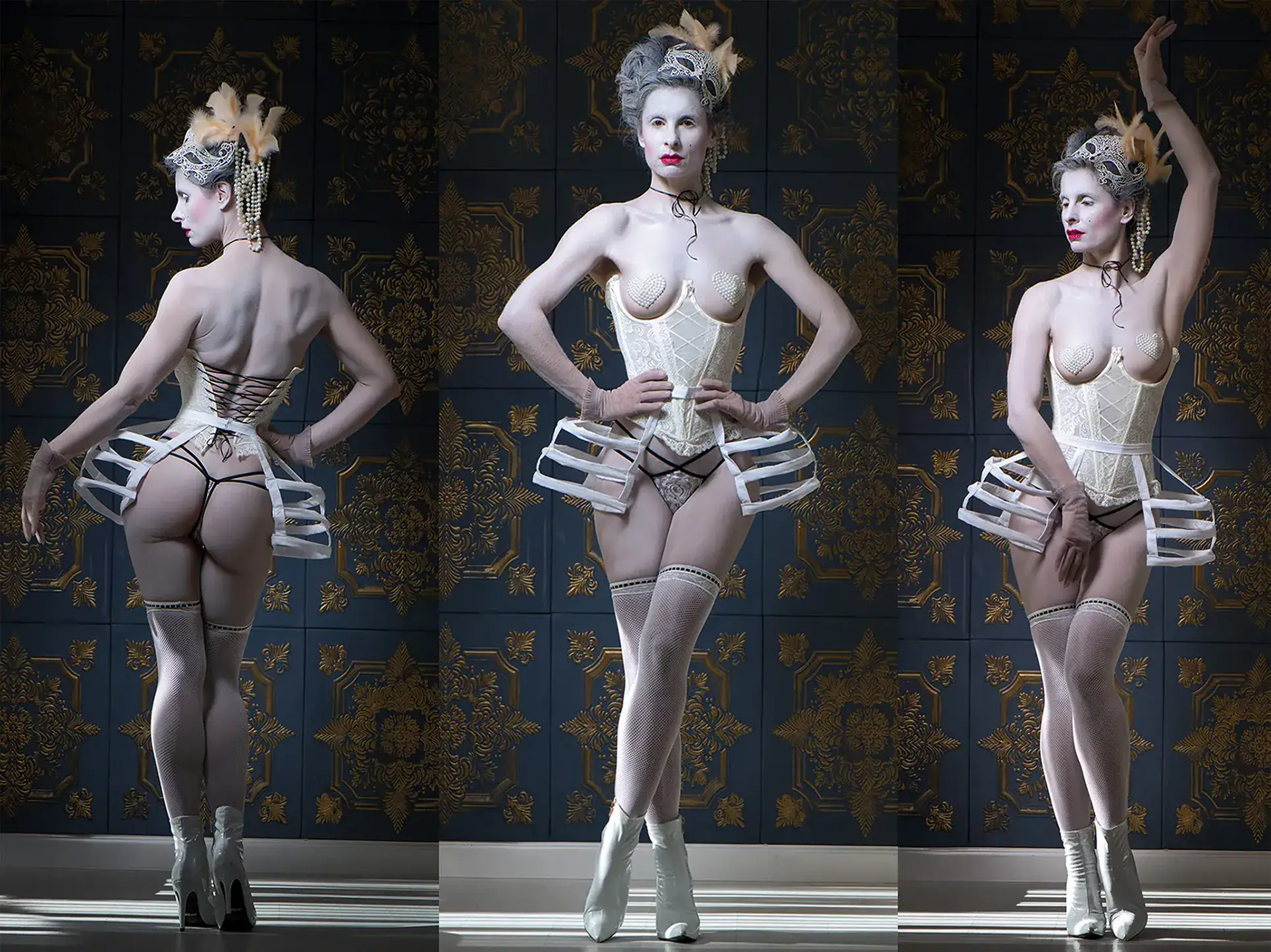
This is where I need to backtrack slightly, because my interest in photographing the human form did not suddenly appear because somebody wore lingerie in front of a camera. I had always been fascinated by the nude and naked form, particularly by the extraordinary lines, curves and shapes the human body creates when it is painted with light. And no, not in the creepy way.
Sculpture fascinated me for much the same reason. Change the direction of the light and the same body can become something completely different. A curve appears, another disappears, muscle becomes visible, a shadow creates shape and suddenly the body is almost a landscape.
I would probably have explored this through drawing or painting if I possessed any meaningful ability to do either. Unfortunately, I don’t. Even my stick figures occasionally look as though they require medical attention. Photography became my way of drawing.
And suddenly those lights sitting in the garage had a purpose.
I Had the Interest. Now I Needed to Learn How to Do It.
Once I decided that I wanted to photograph the human form properly, I became slightly obsessive about learning how.
I attended workshops, studied other photographers and read about lighting, posing, anatomy, composition and retouching. I experimented constantly. I made mistakes, discovered entirely new mistakes while correcting the old ones and gradually began to understand just how much there was still to learn.
I have just turned around while writing this and counted more than 100 “old fashioned” photography books still sitting on the shelves beside my desk. Actual books, made from paper, from that curious period in human history when learning something occasionally involved turning pages. That doesn’t include everything I’ve read digitally, watched, attended or, most importantly, learned by actually photographing people.
And I am still learning today. I hope I always will be, because one of the dangers of doing something for a long time is deciding that you’ve finally worked it all out. Photography has an entertaining habit of proving otherwise.
There Was Just One Problem. What Exactly Was Boudoir Photography?
Remember, I had entered this world backwards. I hadn’t decided to become a boudoir photographer and then learned photography. I was already a photographer who had become fascinated by photographing the human form, and somewhere along the way I discovered that apparently some of what interested me had a name; Boudoir. So what the heck was that?
The word itself is considerably older than boudoir photography. A boudoir was traditionally a woman’s private sitting room, dressing room or bedroom, derived from the French bouder, meaning to sulk. So, at least historically, a boudoir was somewhere a woman could retire to have a good sulk in private.
This is possibly my favourite piece of boudoir trivia.
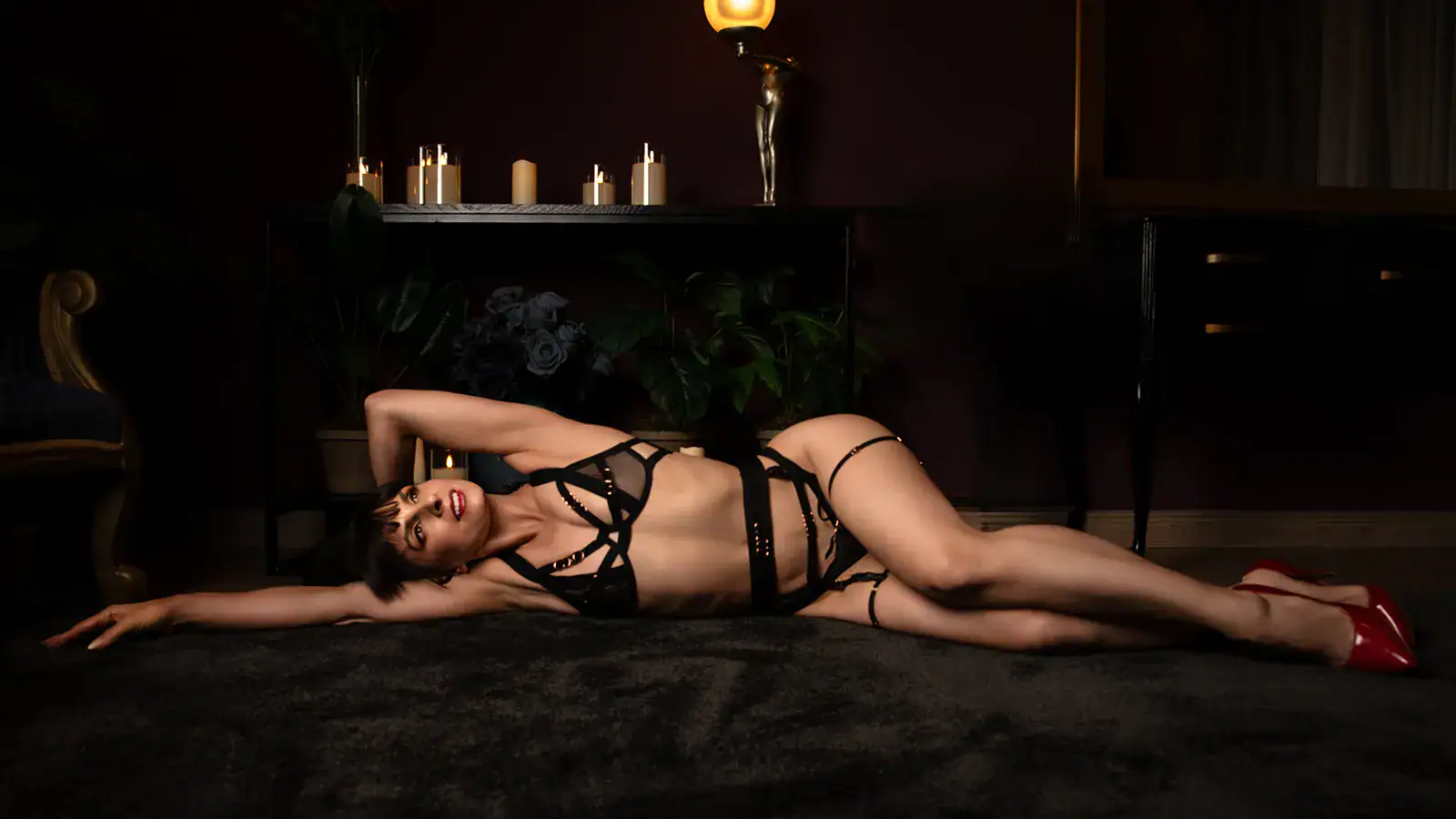
Over time the photographic use of the word evolved into something broader. Today, boudoir photography generally describes intimate or sensual portrait photography, often involving lingerie, suggestive clothing, implied nudity or other forms of intimate portraiture.
That sounds straightforward enough. It isn’t.
I Am Not a Stickler for Labels
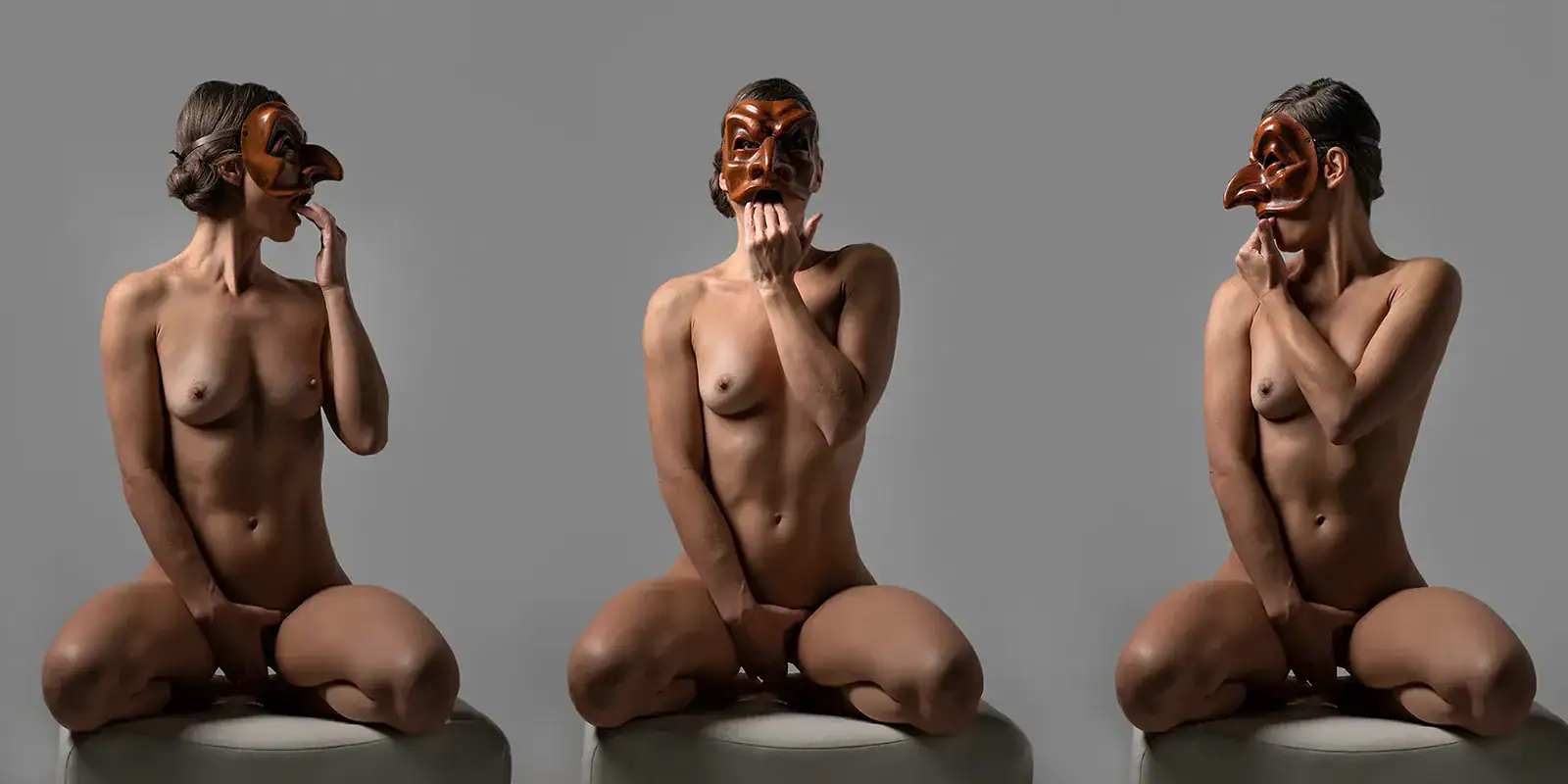
As I became more involved in boudoir photography, I encountered photographers who had very definite ideas about what boudoir was and, perhaps more importantly, what it wasn’t. There were purists who believed boudoir should look a certain way, happen in a certain setting and reveal precisely the correct amount. Once the clothes came off to a particular degree it apparently became nude photography, and introduce something more overtly sexual and somebody would announce that we had crossed an invisible international border into erotic photography.
I understand why definitions exist. They help us talk about different styles of photography and give clients some idea of what they are looking at, but I have never been terribly interested in policing them. I photograph boudoir, sensual portraiture, fine art nude and erotic photography, and sometimes I photograph something that starts comfortably in one of those categories and ends up wandering cheerfully into another. I am not a stickler for labels. I care considerably more about whether the photograph works.
And That Is Where Boudoir Fusion Photography Came From
When I started developing my own style, I realised quite quickly that I didn’t want to photograph according to somebody else’s rigid interpretation of boudoir. I liked beautiful lingerie photography and glamour, loved the sculptural possibilities of the nude form and was fascinated by sensuality and sexuality. I was equally interested, however, in photographs that could suggest almost everything while showing remarkably little.
Sometimes I wanted beautiful soft light and sometimes I wanted deep shadow. I might want something polished and glamorous on one set, then create something darker, more provocative or unmistakably erotic on the next. I wanted the freedom to fuse those things, and that is where the name Boudoir Fusion Photography came from.
The name was never intended to describe one photographic formula. Quite the opposite. It described my refusal to have one, and the business was always supposed to be a fusion of the different ways I enjoyed photographing people. Interestingly, I’ve subsequently discovered a few photography businesses internationally using variations of the Boudoir Fusion name. Whether that is coincidence, inspiration or simply one of those little mysteries the internet produces, I couldn’t possibly say.
Would the Average Person Even Know to Search for a Boudoir Photographer?
Imagine you have never booked anything like this before. You know the sort of photographs you like, or perhaps you only know how you want them to feel, so what would you actually type into Google? Would you search for a boudoir photographer in Johannesburg, a boudoir photoshoot, sensual photography, lingerie photography, a nude photographer, an erotic photographer, or simply something like “sexy photoshoot near me”? You might even search for “tasteful nude photography” or “photoshoot for my partner” without ever knowing that the photography industry has helpfully decided there is a French word you should have been using all along.
I sometimes wonder how many people outside the industry already know that the word they may be looking for is boudoir. This is one reason I don’t expect clients to arrive at my Johannesburg studio speaking fluent photographer. You shouldn’t have to understand our terminology to recognise a photograph you love. Although, if you’re reading an article called Everything You Need to Know About Boudoir Photography, I suspect you have already worked out at least one of the correct things to type into Google.

So What Is Boudoir Photography?
If you want the neat definition, boudoir photography is generally intimate and sensual portrait photography. It often involves lingerie or suggestive clothing and may range from relatively understated portraits through implied nudity and fine art nude photography to images that become considerably more provocative. There, definition supplied, and now we can get back to the considerably more interesting business of making photographs.
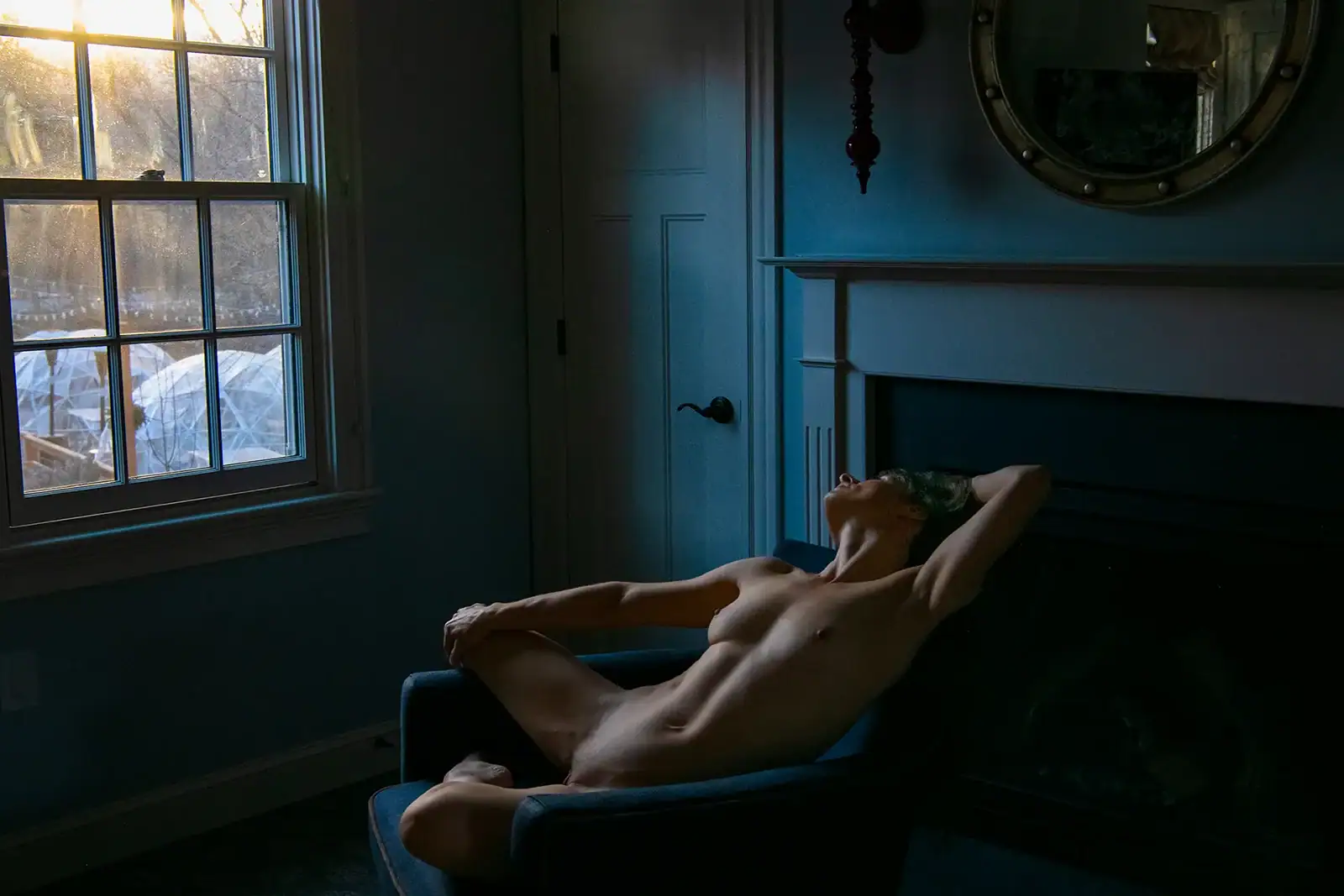
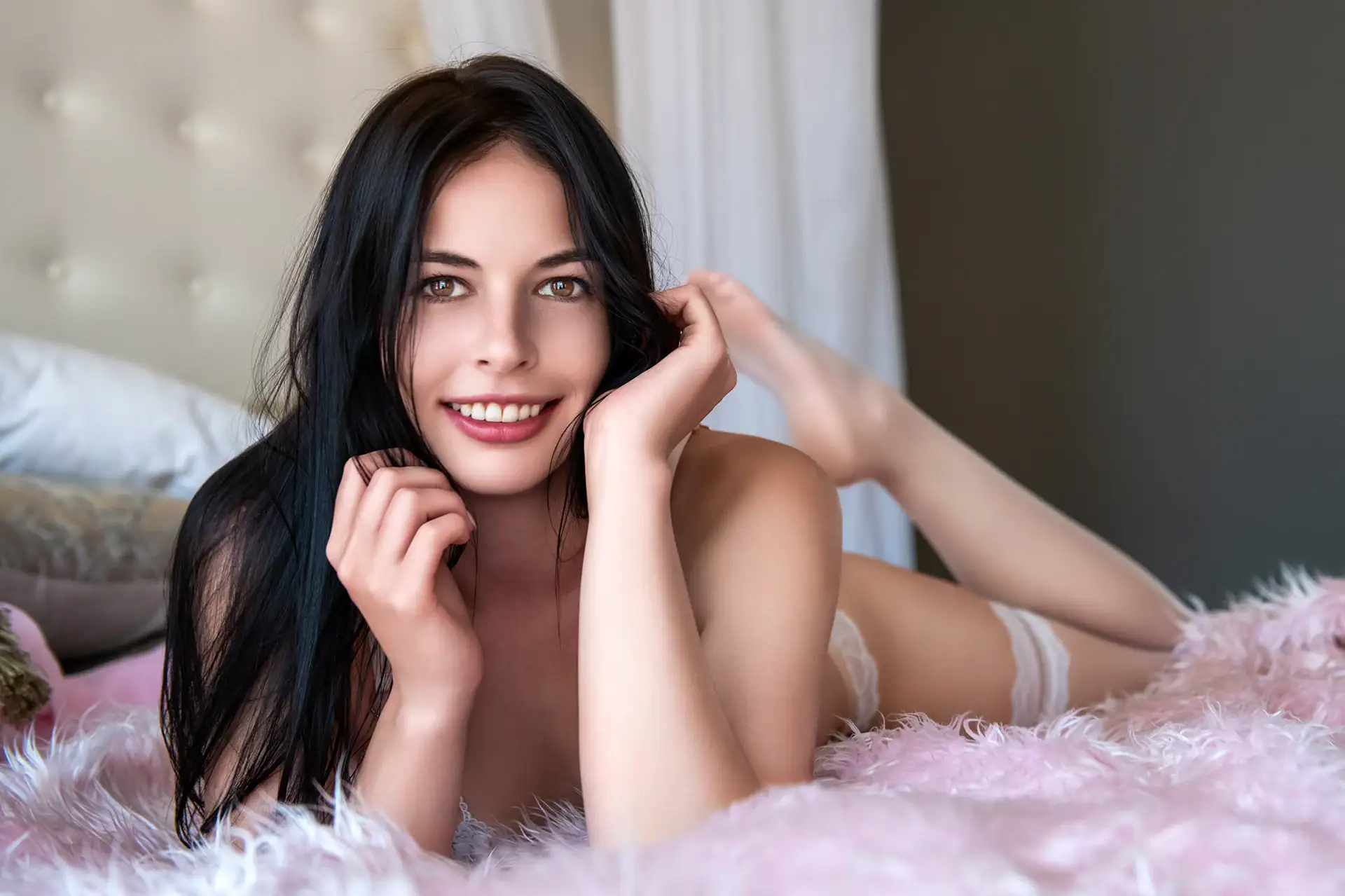
In practice, I think the client gets a considerable say in what her version of boudoir photography means. For one woman it might be an oversized white shirt and beautiful window light, while for somebody else it is stockings, heels and lingerie. Another might want fine art nude photographs in which the body becomes almost sculptural, while somebody else may want something unmistakably sensual or erotic. None of them is doing boudoir incorrectly. They simply want different photographs.
Most Clients Don’t Actually Know Exactly What They Want
This surprises people because you might imagine women arrive carrying a detailed mood board, three spreadsheets and a seventeen point strategic plan for their bottom. Some do arrive with plenty of ideas, but most don’t, and that is absolutely fine.
Quite often somebody will show me two or three photographs she likes that have almost nothing technically in common. One is soft and romantic, another dark and sensual, and the third considerably more adventurous. That’s useful because I’m not necessarily looking for consistency. I’m looking for clues.
Perhaps it is the lighting she likes, the pose, the expression or the shape created by the body. Perhaps she likes the fact that the woman is nude, the mood of the photograph, or simply something about it that she cannot quite put into words. Part of the skill of being a boudoir photographer is figuring that out.
The Person Should Shape the Photography
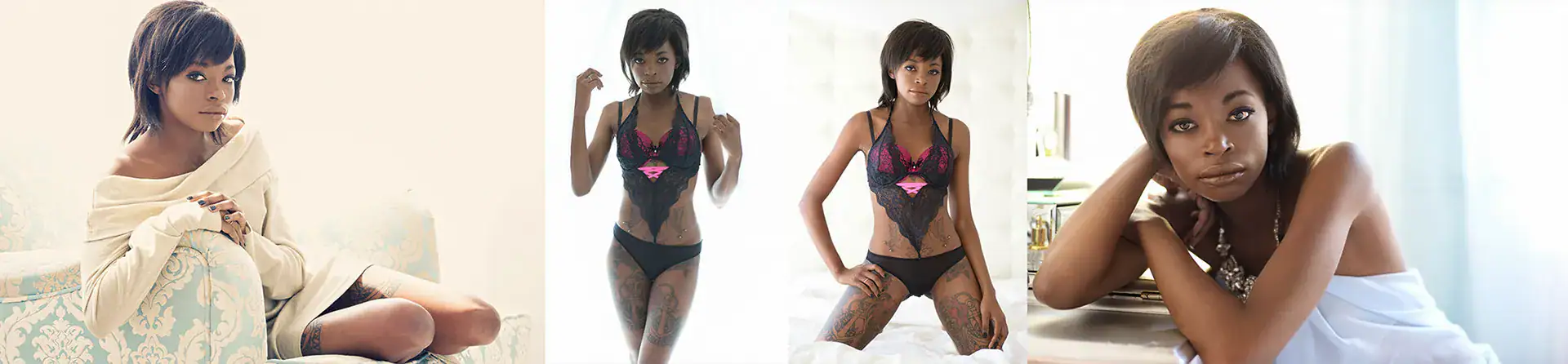
Every body is different, which sounds spectacularly obvious until you consider how often photography ignores it. People have different proportions, flexibility, injuries, confidence levels and ranges of movement. A pose that looks effortless on one person may require another to be airlifted to a physiotherapist.
Personalities are different too. Somebody may be naturally playful, another person may have an extraordinary intensity when she looks into the camera, while somebody else may photograph beautifully when she stops trying to perform for it altogether. This is why I don’t believe a boudoir photoshoot should become a production line of predetermined poses.
Yes, I guide posing, very specifically when necessary, but the skill isn’t memorising 50 positions and moving every client through them in sequence. It is adapting and morphing the photography around the individual. The person should shape the photography. The photography shouldn’t have to reshape the person.
What Actually Makes a Good Boudoir Photograph?
This, to me, is considerably more interesting than deciding which category the photograph belongs in. A woman wearing expensive lingerie does not automatically create a good boudoir photograph any more than standing beside a Ferrari makes somebody a racing driver. The photograph still has to work.
Light matters enormously because it determines what we notice, what disappears, where the eye travels and how the body is described. A tiny adjustment in shoulder position can alter an entire line through the body, while moving a hand a few centimetres can turn something elegant into something awkward, or something ordinary into something surprisingly sensual. Expression, gesture and composition all matter too.
What we don’t show can be every bit as important as what we do. Sometimes the most sensual element of a photograph is the suggestion of what exists outside the frame. Complete nudity can feel peaceful and almost non sexual, while a photograph containing considerably more clothing can feel extraordinarily erotic. Photography is peculiar like that, which is why skin is not a reliable unit of measurement for sensuality.
Boudoir, Nude, Sensual and Erotic Photography Are Not a Ladder
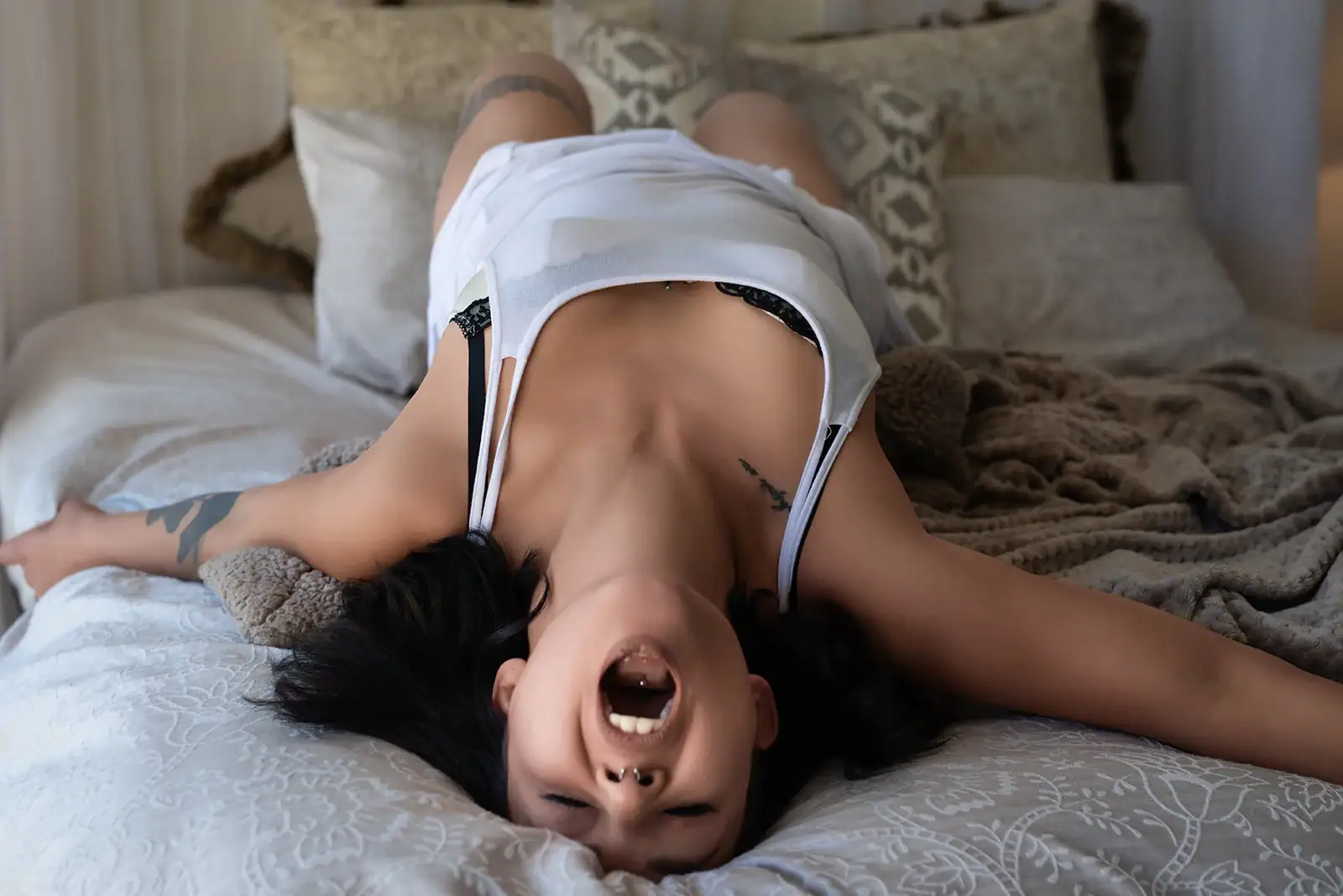
This is worth understanding before booking any intimate photoshoot. Boudoir does not sit at the bottom of a ladder, followed by sensual photography, then nude photography, with erotic photography waiting at the top for particularly advanced participants. They are different visual languages, and they overlap.
A fine art nude photograph may be entirely about line, shape and light. An erotic photograph might reveal very little but contain an expression, gesture or sense of intimacy that makes its intention unmistakable. A boudoir photograph can be playful, glamorous, romantic, moody or provocative, and one photoshoot can quite happily contain several of those things.
I have written separately about the differences between boudoir, nude and erotic photography for anyone who wants to explore the terminology in more detail. For now, the important thing is considerably simpler: you don’t have to choose a label before you choose the photographs.
Nude Doesn’t Necessarily Mean Erotic. Erotic Doesn’t Necessarily Mean Nude.
This is probably one of the biggest misconceptions surrounding sensual photography. Take clothing away and you haven’t automatically made a photograph erotic. You have simply removed clothing. What happens next depends on pose, lighting, expression, framing, context and intention.
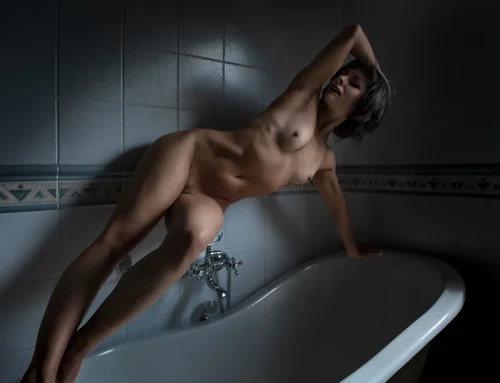
I can photograph the nude human body almost as a landscape, using light to describe muscle, curves and shape, while another photograph might contain far more clothing and considerably more sexual tension. That is one of the reasons the human form fascinated me in the first place. The body gives light something extraordinary to work with, and it is why I am wary of rules based entirely on how many square centimetres of skin are visible. They tell you surprisingly little about the photograph.
You Don’t Need a “Boudoir Body”
There isn’t a particular body you need for boudoir photography, and photography would be an extraordinarily dull profession if there were. One of the things I had to learn when moving from underwater and lifestyle photography into photographing people was that bodies cannot simply be treated as objects placed in front of lights. The relationship between camera position, lens choice, light, posture and perspective changes how we perceive shape.
That is photography. It isn’t about pretending somebody has a different body, but about understanding the one in front of the camera. This is also why copying a pose from Pinterest can be surprisingly unsuccessful. The photograph you are copying involved a different person, different proportions, different flexibility, different lighting and probably a photographer standing somewhere very specific. We can use it as inspiration, then we make it yours.
What You Need From a Boudoir Photographer
This is one area where I think the word photographer matters more than the word boudoir. Naturally, start with the photographs because if you don’t love the work, there isn’t much point going further. But don’t only look at the photographer’s best ten images.
Look at whether they can photograph different people, bodies, ages and personalities. Is there variety in the lighting, expression and mood, or does everybody appear to have been fed through the same posing machine? Then look at the person behind the camera. Read what they write, read genuine client reviews and look at how they discuss privacy, nudity and boundaries. Ask questions and see whether you can have a normal conversation with them.
Choosing a boudoir photographer is not quite the same as finding somebody to take a passport photograph. You are trusting somebody to photograph you in circumstances that may be considerably more personal than anything you have done in front of a camera before. You should love their photographs, but you should also trust the person making them.
You Don’t Have to Decide How Far You Will Go Before You Arrive
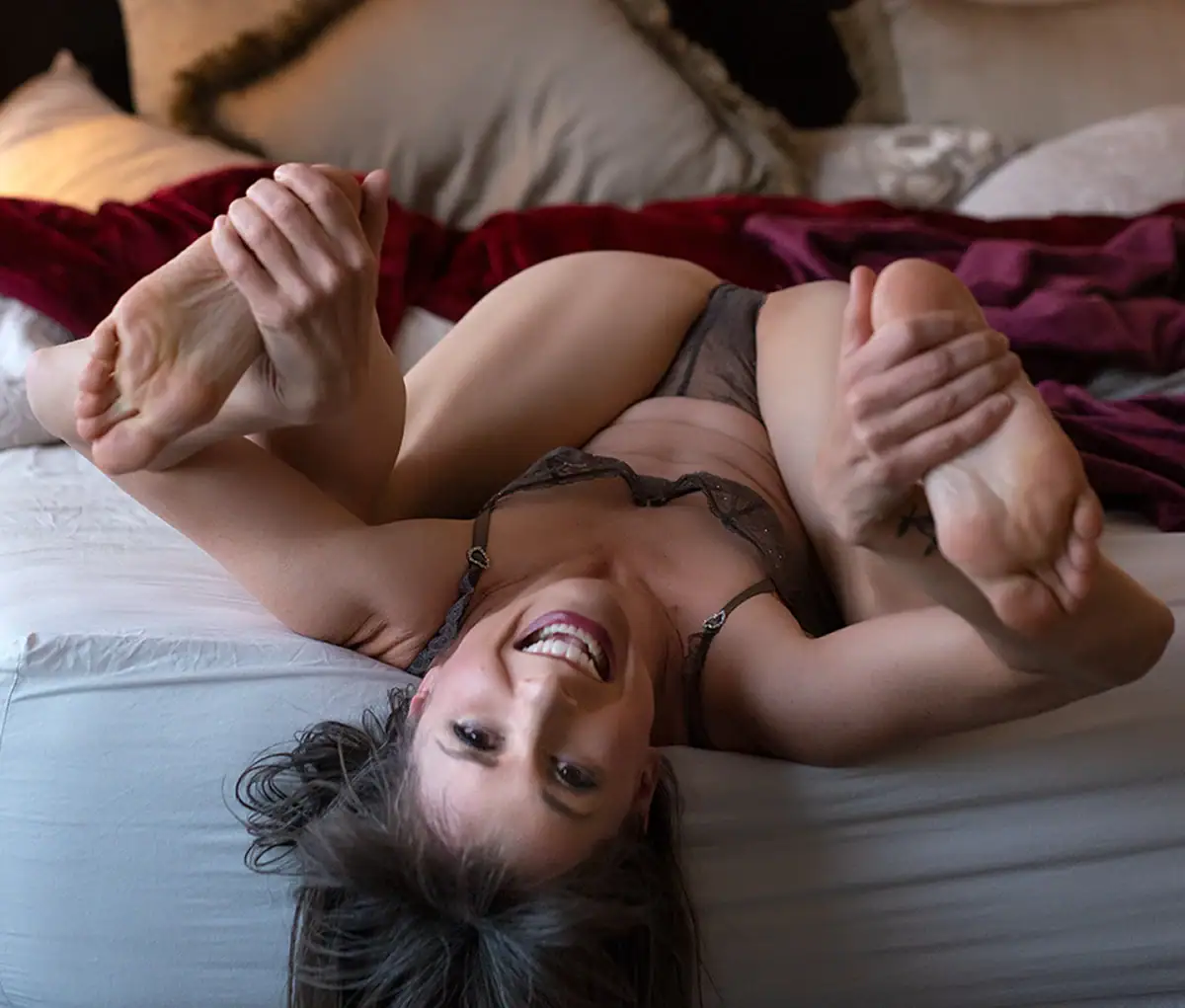
Some women know exactly what they want and others don’t. You may arrive intending to photograph lingerie and discover that, once you are comfortable, you are curious about implied nude or fine art nude photography. Equally, you may have planned nudity and decide on the day that you don’t want to go there. Neither decision requires an explanation.
The point isn’t to progress towards taking more clothes off. There isn’t a finishing line, nobody receives a certificate for reaching it, and the objective is simply to create photographs you actually want. Sometimes the strongest photograph from an entire session is the most revealing, while sometimes it reveals almost nothing. That is rather the point of not being a stickler for labels.
Privacy Is Not a Minor Detail
This is one area where I am considerably less relaxed. Your photographs are private unless you decide otherwise, and the fact that somebody books boudoir photography, nude photography or an erotic photoshoot does not mean she has volunteered to become advertising material for the photographer who created the images. At Boudoir Fusion Photography, photographs are only shared with permission.
This matters particularly in an age where almost everything seems to become content. There is something wonderfully old fashioned about creating photographs that don’t require likes, comments or approval from anybody else. You can have an extraordinary photograph of yourself and never show another living soul. It still exists, and it still matters.
What Does a Boudoir Photoshoot Actually Feel Like?
Usually, considerably more normal than people imagine. There is no ceremonial moment when somebody announces that boudoir photography has officially begun. We talk, choose where to start, look at clothing and ideas, set the lighting and begin making photographs. I make adjustments as we go, and you begin to understand what I am asking you to do and, more importantly, why.
Then something rather useful happens: the camera stops being the most interesting thing in the room. The photoshoot becomes collaborative, we see what is working and change what isn’t, and one idea leads naturally to another. Something you weren’t sure about photographs beautifully, while something we were certain would work doesn’t. That unpredictability is part of why I still enjoy being a boudoir photographer after all these years.
Everything You Need to Know? Perhaps Not Quite.
I called this article Everything You Need to Know About Boudoir Photography, which was admittedly ambitious. After more than 15 years as a boudoir photographer, photographing everything from sensual portraits and lingerie to fine art nude and erotic photography, I am still learning things about light, people and photographs. It would therefore be slightly suspicious if I managed to explain absolutely everything in one article.
Perhaps you don’t need to know everything anyway. You don’t need to memorise the differences between boudoir, sensual, nude and erotic photography, know the names of poses, buy lingerie before speaking to a photographer, or arrive having worked out exactly how adventurous you intend to be. You need to find photographs that make you stop and look, find a photographer whose work makes you wonder what you might look like through their camera, and feel comfortable enough to have a conversation with that person. The rest can evolve.
That, after all, is how Boudoir Fusion Photography started. I didn’t even know what boudoir photography was. I simply knew that I wanted to learn how to create it, and more than 15 years, thousands of photographs, an alarming number of books and a great many remarkable people later, I’m still learning. I rather hope I never stop.
STILL CURIOUS? GOOD.
If you’ve made it this far, you probably know considerably more about boudoir photography than I did when I first heard the word. If you’re wondering what your own photoshoot might look like, you don’t need to decide whether it is boudoir, sensual, nude or erotic before you contact me. Tell me what interests you, show me photographs you love, or simply tell me you haven’t the faintest idea where to begin. We can work out the labels later.
Leave A Comment